WHY NETWORK AUTOMATION
- Previous versions of the CCNA focused on the traditional model of managing / controlling networks
- The current version focuses on the traditional model as well, but CCNA candidates are expected to have a basic understanding of various topics related to network automation
- In the traditional model, engineers manage devices one at a time by connecting to their CLI via SSH
DOWNSIDES OF CONFIGURING DEVICES ONE-BY-ONE
- Typos and other small mistakes are common
- It is time-consuming and very inefficient in large-scale networks
- It is difficult to ensure that all devices ADHERE to the organization’s STANDARD CONFIGURATION
BENEFITS OF NETWORK AUTOMATION
-
Human Error (Typos, etc) is reduced
-
Networks become much more scalable and implemented in a fraction of the time
- New deployments
- Network-wide changes
- Troubleshooting
-
Network-wide policy compliance can be assured
- Standard configurations
- Software versioning
-
The improved efficiency of network operations reduces the OP-EX (operating expenses) of the network. Each task requires fewer man-hours
There are various tools / methods that can be used to automate tasks in the network

- SDN (Software-Defined Networking)
- Ansible
- Puppet
- Python scripts
- etc…
LOGICAL “PLANES” OF NETWORK FUNCTIONS
What does a ROUTER do?
- It forwards messages between networks by examining information in the Layer 3 header
- It uses a routing protocol like OSPF to share route information with other routers and build a routing table
- It uses ARP to build an ARP table, mapping IP Addresses to MAC Addresses
- It uses Syslog to keep logs of events that occur
- and MUCH more…
What does a SWITCH do?
- It forwards messages within a LAN by examining information in the Layer 2 header
- It uses STP to ensure there are no Layer 2 loops in the network
- It builds a MAC address table by examining the Source MAC address of frames
- It uses Syslog to keep logs of events that occur
- It allows a user to connect to it via SSH and manage it
The various functions of network devices can be logically divided up (categorized) into PLANES
- DATA PLANE
- CONTROL PLANE
- MANAGEMENT PLANE
- The operations of the MANAGEMENT PLANE and the CONTROL PLANE are usually managed by the CPU
- However, this is not desirable for DATA PLANE operations because CPU processing is slow (relatively speaking)
- Instead, a specialized hardware ASIC (Application-Specific Integrated Circuit) is used.
- ASICs are chips built for a specific purpose
- Using a SWITCH, as an example:
- When a FRAME is received, the ASIC (not the CPU) is responsible for the switching logic
- The MAC Address table is stored in a kind of memory called TCAM (Ternary Content-Addressable Memory)
- Another common name for the MAC Address table is CAM TABLE
- The ASIC feeds the DESTINATION MAC address of the FRAME into the TCAM which returns the matching MAC Address table entry
- The FRAME is then forwarded out of the appropriate DEVICE
- Modern ROUTERS also use a similar hardware DATA PLANE: An ASIC designed for forwarding logic, and tables store in TCAM
A SIMPLE SUMMARY:
- When a DEVICE receives CONTROL / MANAGEMENT traffic (destined for itself), it will be processed in the CPU
- When a DEVICE receives DATA traffic which should pass through the DEVICE, it is processed by the ASIC for maximum speed
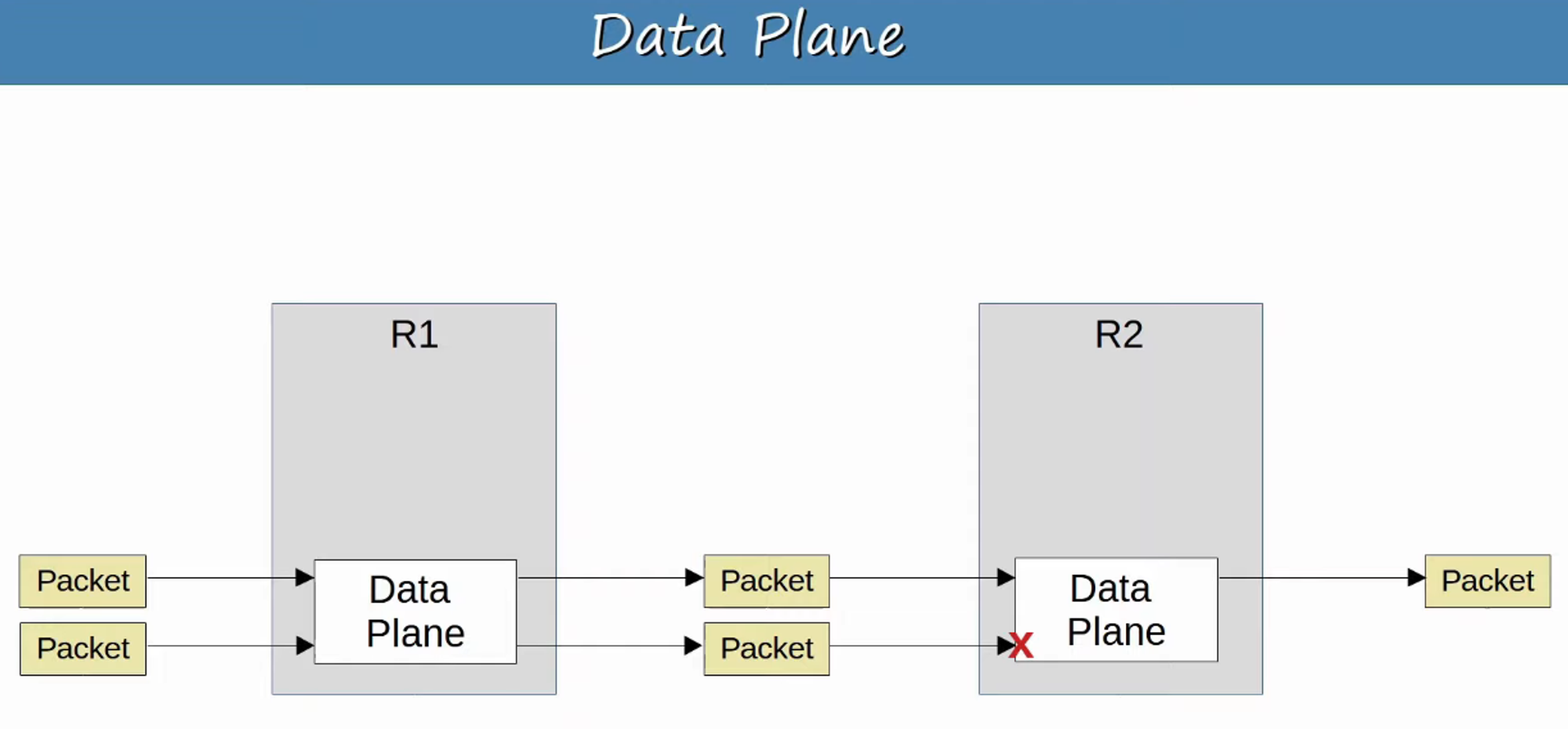
DATA PLANE
- All tasks involved in forwarding USER DATA / TRAFFIC from one INTERFACE to another are part of the DATA PLANE
- A ROUTER receives a message, looks for the most specific matching ROUTER in its ROUTING TABLE, and forwards it out of the appropriate INTERFACE to the next hop
- It also de-encapsulates the original LAYER 2 header, and re-encapsulates with a new header destined for the next hop’s MAC address
- A SWITCH receives a message, looks at the DESTINATION MAC Address, and forwards it out of the appropriate INTERFACE (or FLOODS it)
- This includes functions like adding / removing 802.1q VLAN tags
- NAT (changing the SRC / DST addresses before forwarding) is part of the DATA PLANE
- Deciding to forward / discard messages due to ACL’s, port-security, etc. is part of the DATA PLANE
- The DATA PLANE is also called the ‘FORWARDING PLANE’
CONTROL PLANE
-
How does a DEVICE’s DATA PLANE make its forwarding decisions?
- ROUTING TABLE
- MAC ADDRESS table
- ARP table
- STP
- etc…
-
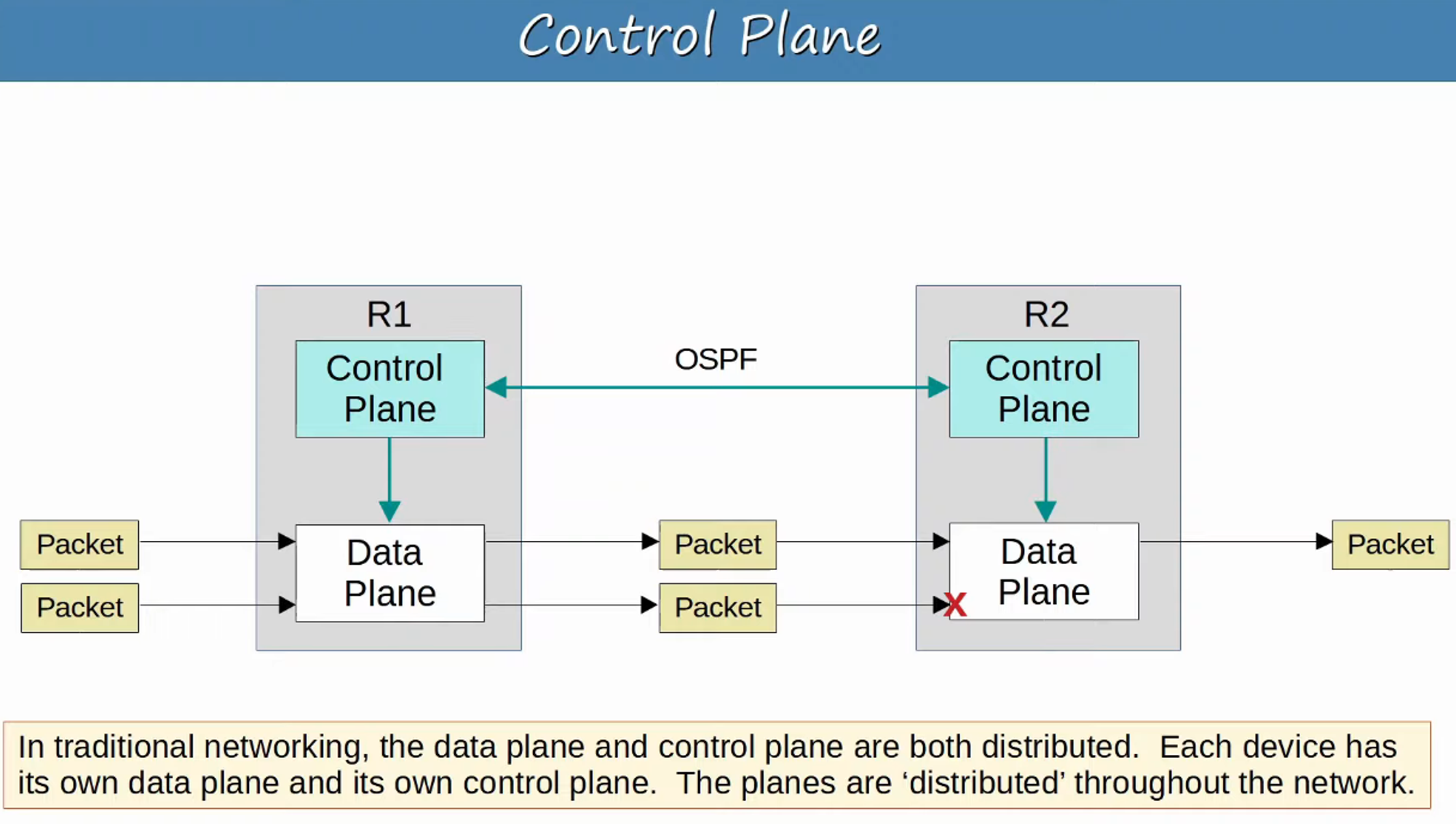
Functions that build THESE tables (and other functions that influence the DATA PLANE) are part of the CONTROL PLANE
-
The CONTROL PLANE controls what the DATA PLANE does, for example by building the ROUTER’s ROUTING TABLE
-
The CONTROL PLANE performs overhead work
- OSPF itself doesn’t forward user data packets, but it informs the DATA PLANE about HOW packets should be forwarded
- STP itself isn’t directly involved in the process of forwarding FRAMES, but it informs the DATA PLANE about which INTERFACES should and shouldn’t be used to forward FRAMES
- ARP messages aren’t user data but they are used to build an ARP TABLE which is used in the process of forwarding data
MANAGEMENT PLANE
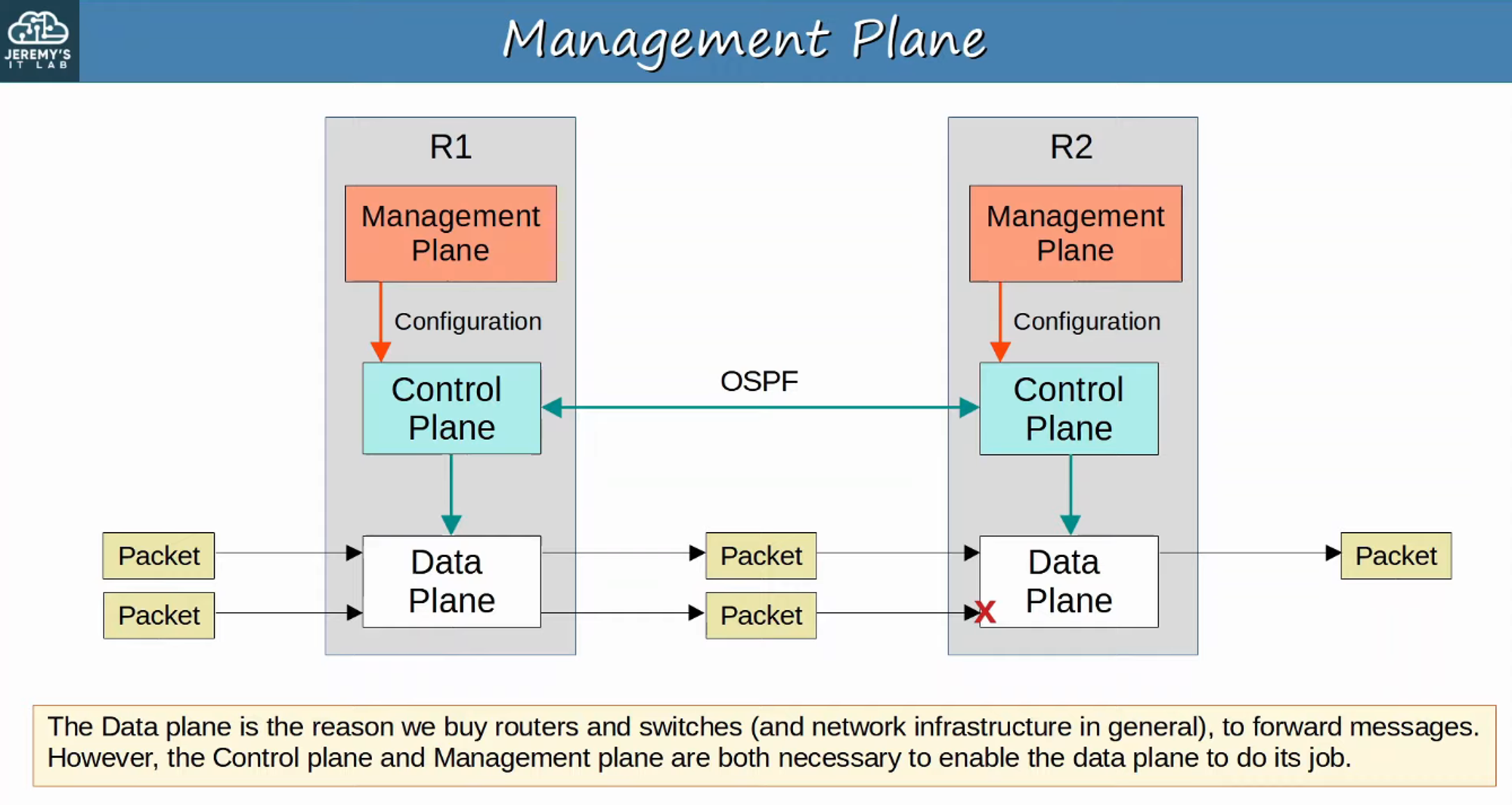
- Like the CONTROL PLANE, the MANAGEMENT PLANE performs overhead work
- However, the MANAGEMENT PLANE doesn’t directly affect the forwarding of messages in the DATA PLANE
- The MANAGMENT PLANE consists of PROTOCOLS that are used to manage devices
- SSH / TELNET : Used to connect to the CLI of a DEVICE to configure / manage it
- SYSLOG : Used to keep logs of events that occur on the device
- SNMP : Used to monitor the operations of the device
- NTP : Used to maintain accurate time on the device
SOFTWARE-DEFINED NETWORKING (SDN)
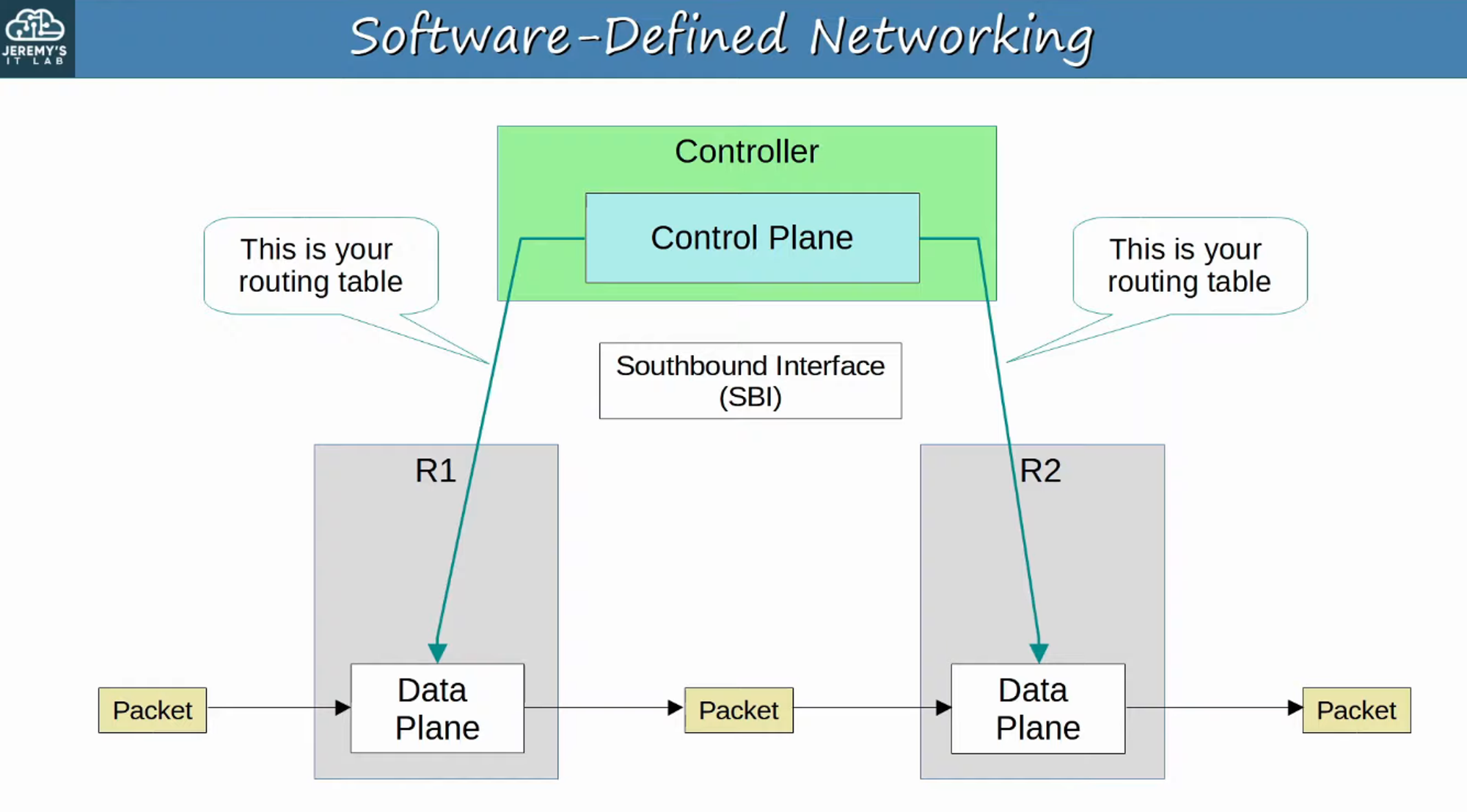
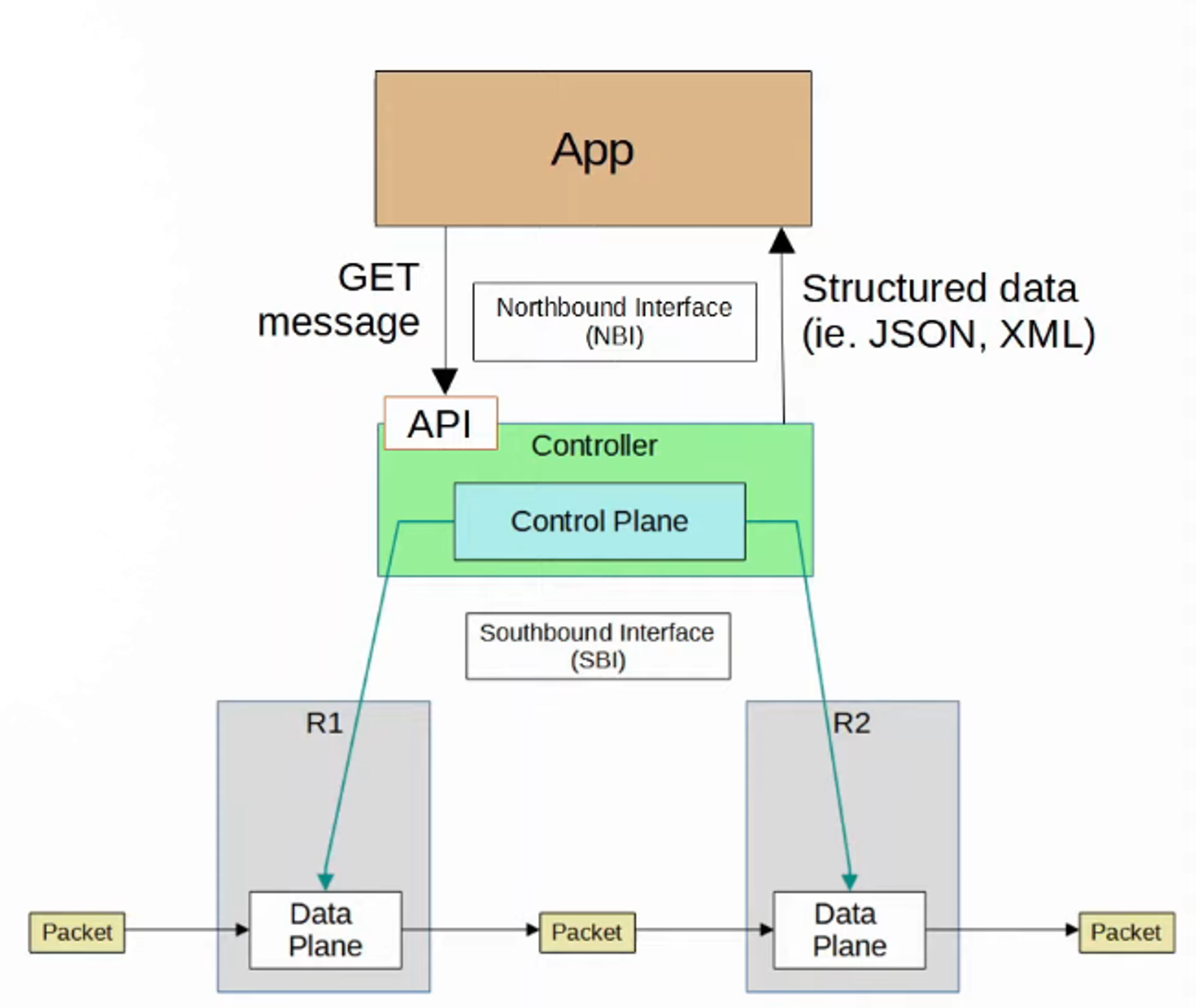
- SOFTWARE-DEFINED NETWORKING (SDN) is an approach to networking that centralizes the CONTROL PLANE into an application called a CONTROLLER
- SDN is also called SOFTWARE-DEFINED-ARCHITECTURE (SDA) or CONTROLLER-BASED NETWORKING
- Traditional CONTROL PLANES use a distributed architecture
- For example:
- Each ROUTER in the NETWORK runs OSPF and the ROUTERS share routing information and then calculate their preferred routes to each destination
- For example:
- An SDN CONTROLLER centralized CONTROL PLANE functions like calculation routes
- That is just an example and how much of the CONTROL PLANE is centralized varies greatly
- The CONTROLLER can interact programmatically with the NETWORK DEVICE using APIs (Application Programming Interface)
SOUTHBOUND INTERFACE (SBI)
-
The SBI is used for communications between the CONTROLLER and the NETWORK DEVICES it controls
-
It typically consists of a COMMUNICATION PROTOCOL and API (Application Programming Interface)
-
APIs facilitate data exchanges between programs
- DATA is exchanged between the CONTROLLER and the NETWORK DEVICES
- An API on the NETWORK DEVICES allows the CONTROLLER to access information on the DEVICES, control their DATA PLANE TABLES, etc.
-
Some examples of SBIs :
- OpenFlow
- Cisco OpFlex
- Cisco OnePK (Open Network Environment Platform Kit)
- NETCONF
NORTHBOUND INTERFACE (NBI)
-
Using the SBI, the CONTROLLER communicates with the managed DEVICES and gathers information about them:
- The DEVICES in the NETWORK
- The TOPOLOGY (how the DEVICES are connected together)
- The available INTERFACES on each DEVICE
- Their CONFIGURATIONS
-
The NORTHBOUND INTERFACE (NBI) is what allows us to:
- Interact with the CONTROLLER
- Access the DATA it gathers about the NETWORK
- Program the NETWORK
- Make changes to the NETWORK via the SBI
-
A REST API (Representational State Transfer) is used on the controller as an interface for APPS to interact with it
-
OSGi (Java Open Services Gateway Initiative) - Java based NBI API
-
DATA is sent in a structured (serialized) format such as JSON or XML
- This makes it easier for programs to use the DATA
AUTOMATION IN TRADITIONAL NETWORKS VS SDN
- Networking tasks can be automated in traditional NETWORK architectures too:
- SCRIPTS can be written (ie: using Python) to push commands to many DEVICES at once
- Python with good use of REGULAR EXPRESSIONS can parse through “show” commands to gather information about network devices
- However, the robust and centralized DATA collected by SDN CONTROLLERS greatly facilitates these functions
- The CONTROLLER collects information about all DEVICES in the NETWORK
- NORTHBOUND APIs allow APPS to access information in a format that is easy for programs to understand (ie: JSON and XML)
- The centralized DATA facilitates network-wide analytics
- SDN Tools can provide the benefits of automation without the requirement of third-party scripts and apps.
- You don’t need expertise in automation to make use of SDN Tools
- However, APIs allow third-party applications to interact with the CONTROLLER, which can be very powerful
💡 Although SDN and automation aren’t the same thing, the SDN architecture greatly facilitates the automation of various tasks in the network via the SDN CONTROLLER and APIs