INTRO TO WIRELESS NETWORK SECURITY
-
Although SECURITY is important in ALL NETWORKS, it is even more essential in WIRELESS NETWORKS
-
Because WIRELESS SIGNALS are not contained within a WIRE, any DEVICE within range of the signal can receive traffic
-
In WIRED NETWORKS, traffic is often only ENCRYPTED when sent over an UNTRUSTED NETWORK such as the INTERNET
-
In WIRELESS NETWORKS, it is VERY important to ENCRYPT traffic sent between the WIRELESS CLIENTS and the AP
-
We will cover THREE MAIN CONCEPTS:
- AUTHENTICATION
- ENCRYPTION
- INTEGRITY
AUTHENTICATION
- All CLIENTS must be AUTHENTICATED before they can associate with an AP
- In a corporate setting, only TRUSTED USERS / DEVICES should be given ACCESS to the NETWORK
- In corporate settings, a separate SSID which doesn’t have ACCESS to the corporate NETWORK can be provided for GUEST USERS
- Ideally, CLIENTS should also AUTHENTICATE the AP to avoid associating with a malicious AP
- There are MULTIPLE WAYS to AUTHENTICATE:
- PASSWORD
- USERNAME / PASSWORD
- CERTIFICATES
ENCRYPTION
- Traffic sent between CLIENTS and APs should be ENCRYPTED so that it can’t be read by anyone except the AP and the CLIENT
- There are many possible PROTOCOLS that can be used to ENCRYPT traffic
- All DEVICES on the WLAN will use the same PROTOCOL, however each CLIENT will use a unique ENCRYPTION / DECRYPTION KEY so that other DEVICES can’t read its traffic
- A “GROUP KEY” is used by the AP to ENCRYPT traffic that it wants to send to all of its clients
- All of the CLIENTS associated with the AP keep that key so they can DECRYPT the traffic
INTEGRITY
- As explained in the “SECURITY FUNDAMENTALS” video of the course, INTEGRITY ensures that the message is not modified by a third-party
- The message that is sent by the SOURCE HOST should be the same as the message that is received by the DESTINATION HOST
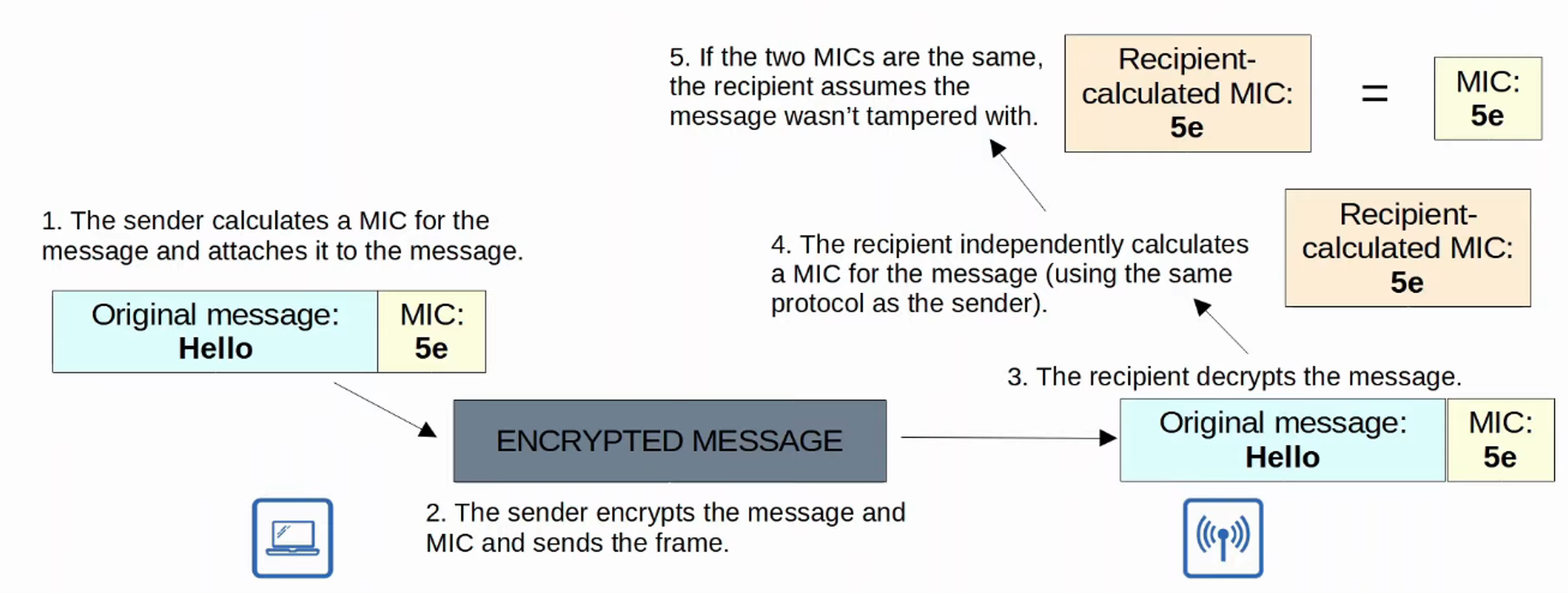
- A MIC (Message Integrity Check) is added to the message to help protect their INTEGRITY.
AUTHENTICATION METHODS
The original 802.11 STANDARD included TWO OPTIONS for AUTHENTICATION:
- OPEN AUTHENTICATION
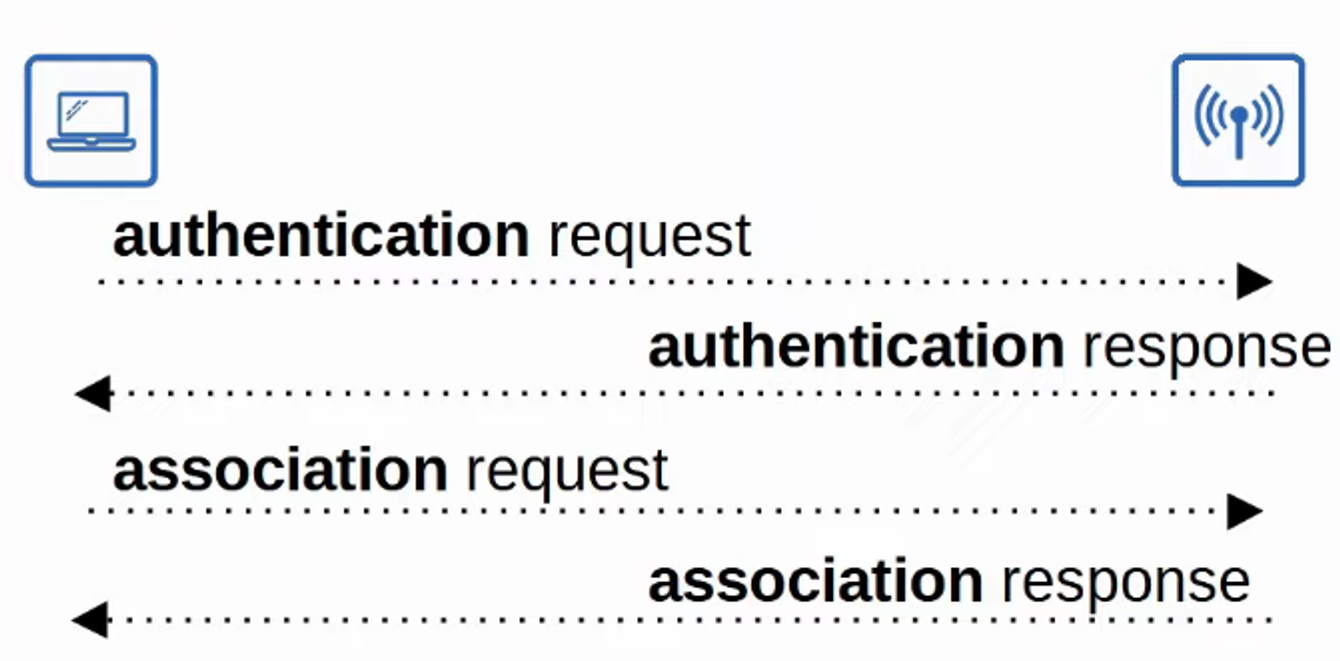
- The CLIENT sends an AUTHENTICATION REQUEST and the AP just accepts it
- The is clearly NOT a SECURE AUTHENTICATION method
- After the CLIENT is AUTHENTICATED and associated with the AP, it’s possible to require the USER to AUTHENTICATE via other methods before ACCESS to the NETWORK is granted (ie: Starbucks WI-FI)
- WEP (Wired Equivalent Privacy)
- WEP is used to provide both AUTHENTICATION and ENCRYPTION of WIRELESS traffic
- For ENCRYPTION, WEP uses the RC4 ALGORITHM
- WEP is a “SHARED-KEY” PROTOCOL, requiring the SENDER and RECEIVER to have the same KEY
- WEP KEYS can be 40 bits or 104 bits in length
- The above KEYS are combined with a 24-bit “IV” (INITIALIZATION VECTOR) to bring the total length to 64 bits or 128 bits
- WEP ENCRYPTION is NOT SECURE and can easily be cracked
- WEP can be used for AUTHENTICATION like this:

EAP (Extensible Authentication Protocol)
- EAP is an AUTHENTICATION FRAMEWORK
- It defines a STANDARD SET of AUTHENTICATION FUNCTIONS that are used by the various EAP METHODS
- We will look at FOUR EAP METHODS:
- LEAP
- EAP-FAST
- PEAP
- EAP-TLS
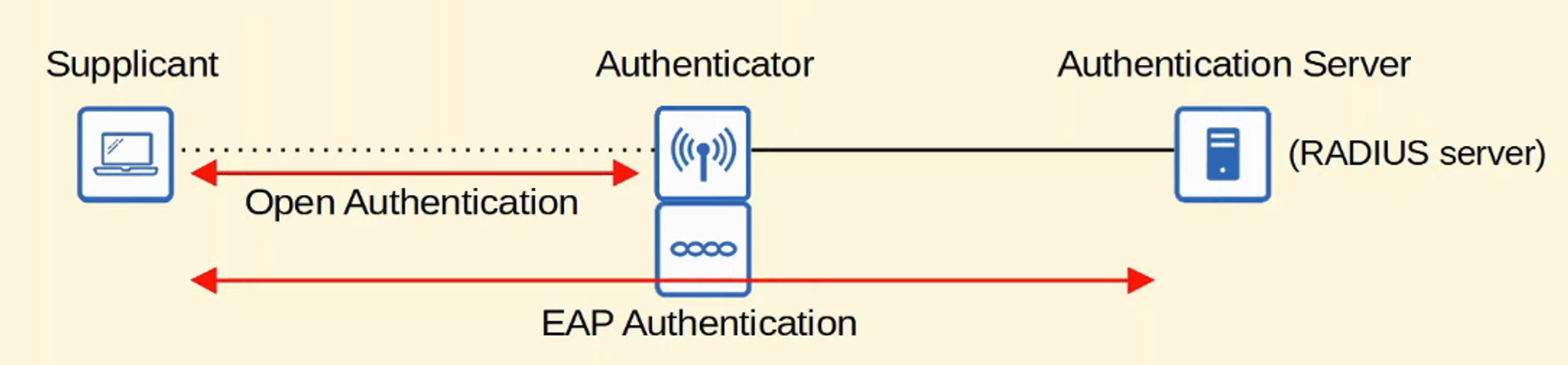
- EAP is integrated with 802.1X which provides PORT-BASED NETWORK ACCESS CONTROL
802.1X is used to limit NETWORK ACCESS for CLIENTS connected to a LAN or WLAN until they AUTHENTICATE
There are THREE MAIN ENTITIES in 802.1X:
- SUPPLICANT : The DEVICE that wants to connect to the NETWORK
- AUTHENTICATOR : The DEVICE that provides access to the NETWORK
- AUTHENTICATION SERVER (AS) : The DEVICE that receives CLIENT credentials and PERMITS / DENIES ACCESS
- LEAP (Lightweight EAP)
- LEAP was developed by Cisco an an improvement over WEP
- CLIENTS must provide a USERNAME and PASSWORD to AUTHENTICATE
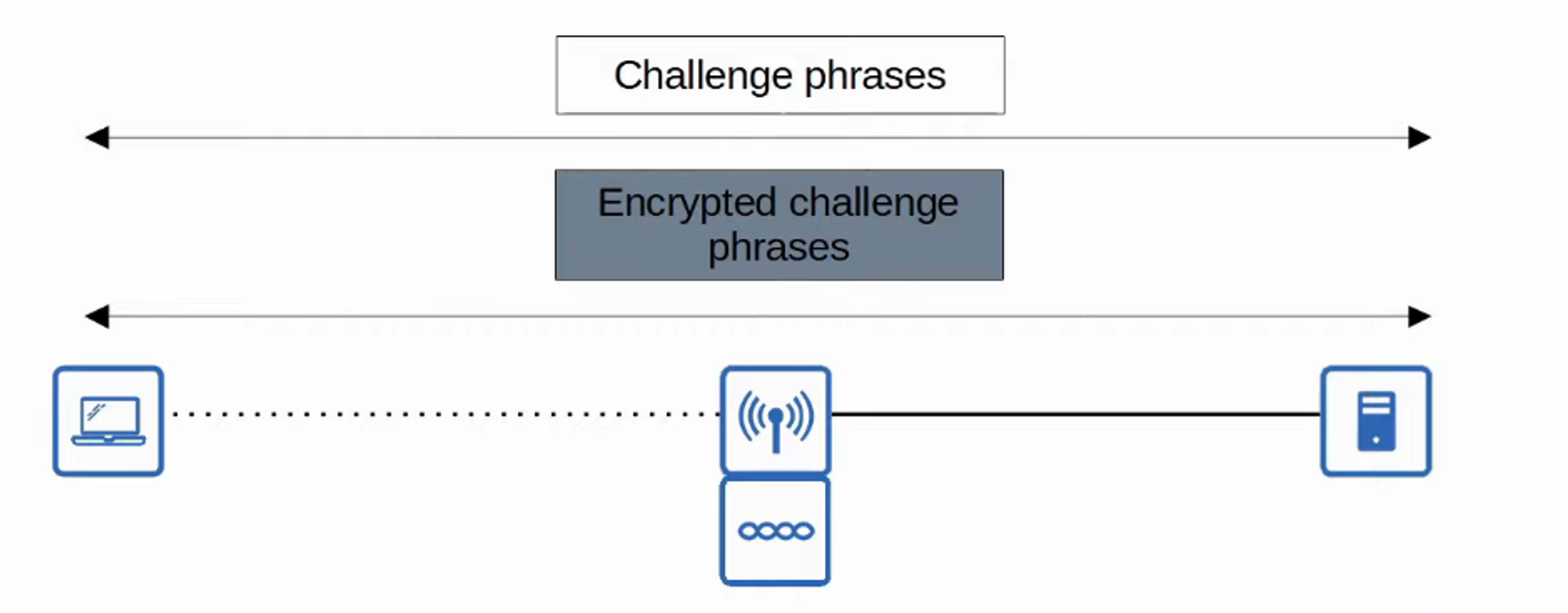
- In addition, MUTUAL AUTHENTICATION is provided by both the CLIENT and SERVER sending a CHALLENGE PHRASE to each other.
- DYNAMIC WEP KEYS are used, meaning that the WEP KEYS are changed frequently
- Like WEP, LEAP is considered vulnerable and should not be used anymore
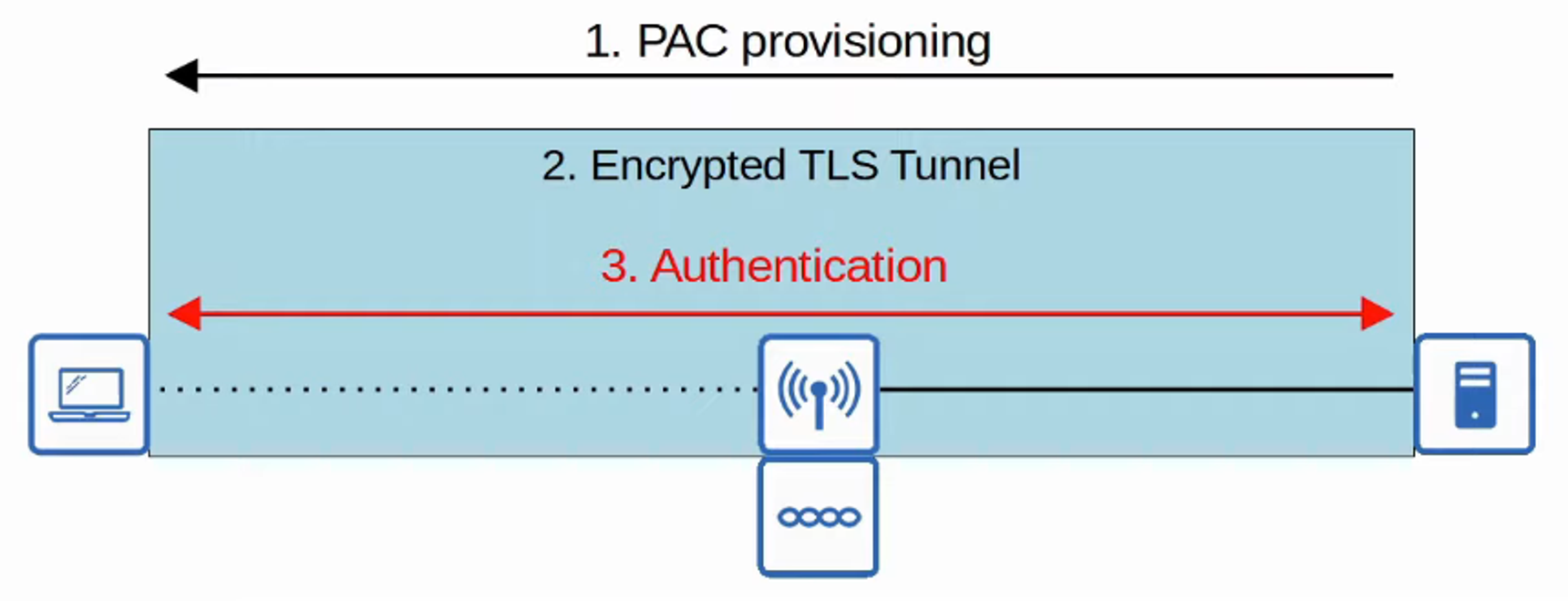
- EAP-FAST (EAP FLEXIBLE AUTHENTICATION via SECURE TUNNELING)
- EAP-FAST was also developed by Cisco
- Consists of THREE PHASES:
- A PAC (PROTECTED ACCESS CREDENTIAL) is generated and passed from SERVER to CLIENT
- A SECURE TLS TUNNEL is established between the CLIENT and AUTHENTICATION SERVER
- Inside of the SECURE (ENCRYPTED) TLS TUNNEL, the CLIENT and SERVER communicated further to AUTHENTICATE / AUTHORIZE the CLIENT
- PEAP (PROTECTED EAP)
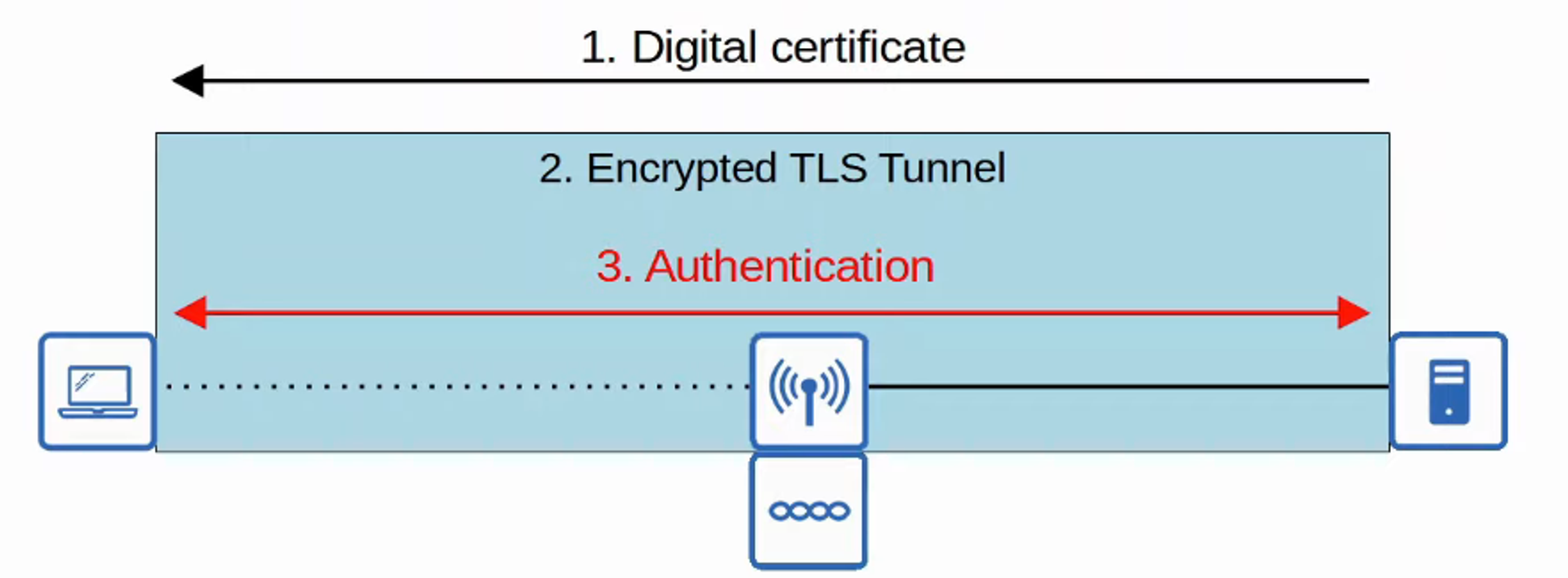
- Like EAP-FAST, PEAP involves establishing a SECURE TLS TUNNEL between the CLIENT and SERVER
- Instead of a PAC, the SERVER has a DIGITAL CERTIFICATE
- The CLIENT uses this DIGITAL CERTIFICATE to AUTHENTICATE the SERVER
- The CERTIFICATE is also used to establish a TLS TUNNEL
- Because only the SERVER provides a CERTIFICATE for AUTHENTICATION, the CLIENT must still be AUTHENTICATED within the SECURE TUNNEL
- Example: MS-CHAP (Microsoft Challenge-Handshake Authentication Protocol)
- EAP-TLS (EAP TRANSPORT LAYER SECURITY)
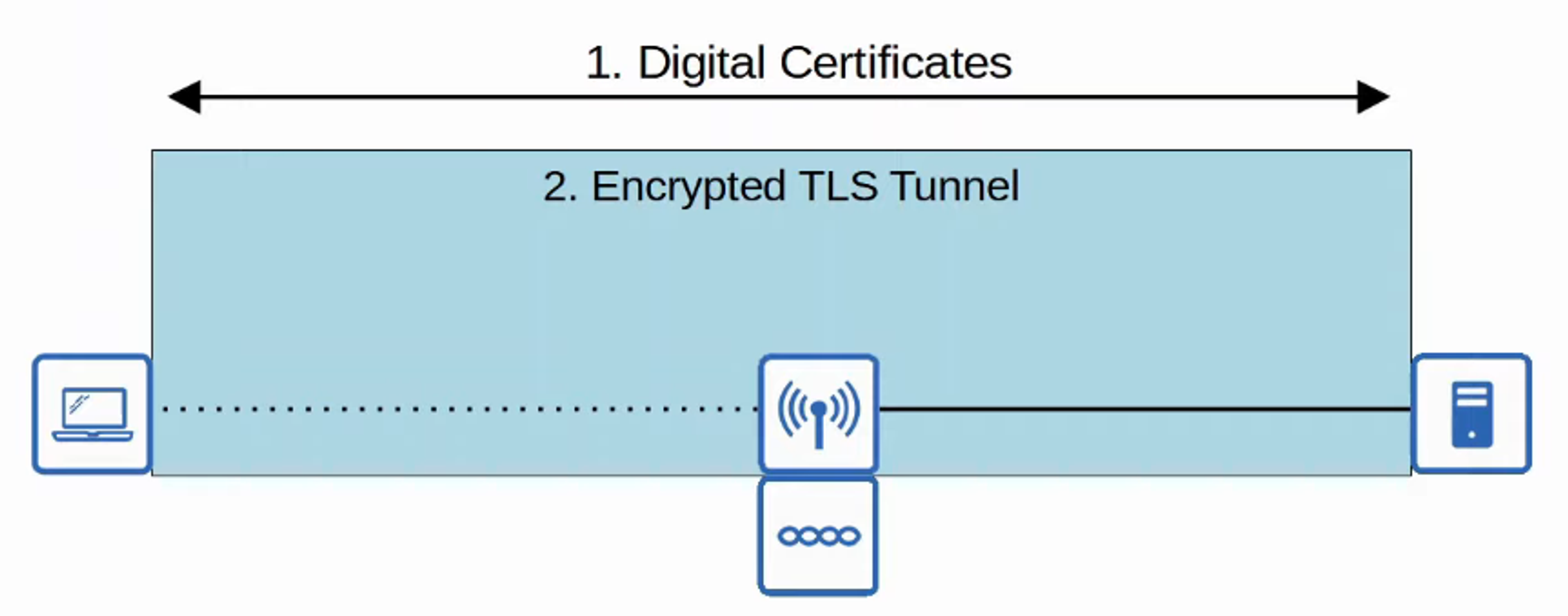
- Whereas PEAP only requires the AS to have a CERTIFICATE, EAP-TLS requires a CERTIFICATE on the AS and on every single CLIENT
- EAP-TLS is the MOST SECURE WIRELESS AUTHENTICATION method, but it is more difficult to implement than PEAP because every CLIENT DEVICE needs a CERTIFICATE
- Because the CLIENT and SERVER AUTHENTICATE each other with DIGITAL CERTIFICATES, there is no need to AUTHENTICATE the CLIENT within the TLS TUNNEL
- The TLS TUNNEL is still used to exchange ENCRYPTION KEY information (ENCRYPTION methods will be discussed next)
ENCRYPTION / INTEGRITY METHODS
- TKIP (Temporal Key Integrity Protocol)
- WEP was found to be vulnerable, but WIRELESS hardware at the time was built to use WEP
- A temporary solution was needed until a new STANDARD was created and a new HARDWARE was built
- TKIP adds various SECURITY FEATURES:
- A MIC (Message Integrity Check) is added to protect the integrity of messages
- A KEY MIXING ALGORITHM is used to create a unique WEP key for every frame
- The INITIALIZATION VECTOR is doubled in length from 24 bits to 48 bits, making BRUTE-FORCE attacks much more difficult
- The MIC includes the SENDER MAC ADDRESS to identify the FRAME’s SENDER
- A TIMESTAMP is added to the MIC to prevent replay attacks. Replay attacks involved re-resending a FRAME that has already been transmitted
- A TKIP SEQUENCE NUMBER is used to keep track of FRAMES sent from each SOURCE MAC ADDRESS. This also protects against REPLAY ATTACKS
** You probably don’t need to memorize ALL of the above features
** TKIP is used in WPA version 1, which will be discussed in the next section
-
CCMP (Counter / CBC-MAC Protocol)
- CCMP was developed after TKIP and is more SECURE
- It is used in WPA2
- To use CCMP, it must be supported by the DEVICE’S hardware.
- Old hardware built only to use WEP / TKIP cannot use CCMP
- CCMP consists of TWO DIFFERENT ALGORITHMS to provide ENCRYPTION and MIC :
- AES (Advanced Encryption Standard) COUNTER MODE ENCRYPTION
- AES is the MOST SECURE ENCRYPTION PROTOCOL currently available.
- Widely used all over the world
- There are multiple MODES of operation for AES.
- CCMP uses “COUNTER MODE”
- CBC-MAC (CIPHER BLOCK CHAINING MESSAGE AUTHENTICATION CODE)
- Used as a MIC to ENSURE the INTEGRITY of MESSAGES
- AES (Advanced Encryption Standard) COUNTER MODE ENCRYPTION
-
GCMP (GALOIS / COUNTER MODE PROTOCOL)
- GCMP is MORE SECURE and EFFICIENT than CCMP
- Its increased efficiency allows higher data throughput than CCMP
- It is used in WPA3
- GCMP consists of TWO ALGORITHMS:
- AES COUNTER MODE ENCRYPTION
- GMAC (GALOIS MESSAGE AUTHENTICATION CODE)
- Used as a MIC to ENSURE the INTEGRITY of MESSAGE
WI-FI PROTECTED ACCESS (WPA)
-
The WI-FI Alliance has developed THREE WPA CERTIFICATIONS for WIRELESS DEVICES:
- WPA
- WPA2
- WPA3
-
To be WPA-CERTIFIED, EQUIPMENT must be TESTED in authorized testing labs
-
All of the above support TWO AUTHENTICATION MODES:
- PERSONAL MODE :
- A PRE-SHARED KEY (PSK) is used for AUTHENTICATOIN
- When you connect to a home WI-FI NETWORK, enter the PASSWORD and are AUTHENTICATED, that is PERSONAL MODE
- This is common in small NETWORKS
- The PSK itself is NOT sent over the air
- A FOUR-WAY HANDSHAKE is used for AUTHENTICATION and the PSK is used to GENERATE ENCRYPTION KEYS
- ENTERPRISE MODE :
- 802.1X is used with an AUTHENTICATION SERVER (RADIUS SERVER)
- No specific EAP METHOD is specified, so all are supported (PEAP, EAP-TLS, etc)
WPA
- The WPA CERTIFICATION was developed after WEP was proven to be vulnerable and includes the following PROTOCOLS:
- TKIP (based on WEP) provides ENCRYPTION / MIC
- 802.1X AUTHENTICATION (ENTERPRISE MODE) or PSK (PERSONAL MODE)
WPA2
- Was released in 2004 and includes the following PROTOCOLS:
- CCMP provides ENCRYPTION / MIC
- 802.1X AUTHENTICATION (ENTERPRISE MODE) or PSK (PERSONAL MODE)
WPA3
- Was released in 2018 and includes the following PROTOCOLS:
-
GCMP provides ENCRYPTION / MIC
-
802.1X AUTHENTICATION (ENTERPRISE MODE) or PSK (PERSONAL MODE)
-
WPA3 also provides several additional security features:
- PMF (PROTECTED MANAGEMENT FRAMES)
- Protecting 802.11 MANAGEMENT FRAMES from eavesdropping / forging
- SAE (SIMULTANEOUS AUTHENTICATION OF EQUALS)
- Protects the four-way handshake when using PERSONAL MODE AUTHENTICATION
- FORWARD SECRECY
- Prevents DATA from being DECRYPTED after it has been transmitted over the air so an ATTACKER can’t capture WIRELESS FRAMES and then try to DECRYPT them later
- PMF (PROTECTED MANAGEMENT FRAMES)
-
- PERSONAL MODE :