Classification and Marking
- The goal of Quality of Service (QoS) is to give certain types of network traffic priority over others during periods of congestion.
- Classification organizes network traffic (packets) into different traffic classes (categories), a fundamental step in implementing QoS.
- To apply different treatments to various types of traffic, we first need to identify them.
Methods of Classifying Traffic:
- Access Control Lists (ACLs): Only traffic that matches the ACL’s criteria receives the specified QoS treatment, while other traffic doesn’t.
- NBAR (Network Based Application Recognition): Performs deep packet inspection up to Layer 7, identifying specific traffic types based on application protocols.
- Layer 2 and Layer 3 Headers: These contain fields used for classification:
- PCP (Priority Code Point) in the Ethernet header (802.1Q tag).
- DSCP (Differentiated Services Code Point) in the IP header for higher granularity.
PCP and CoS

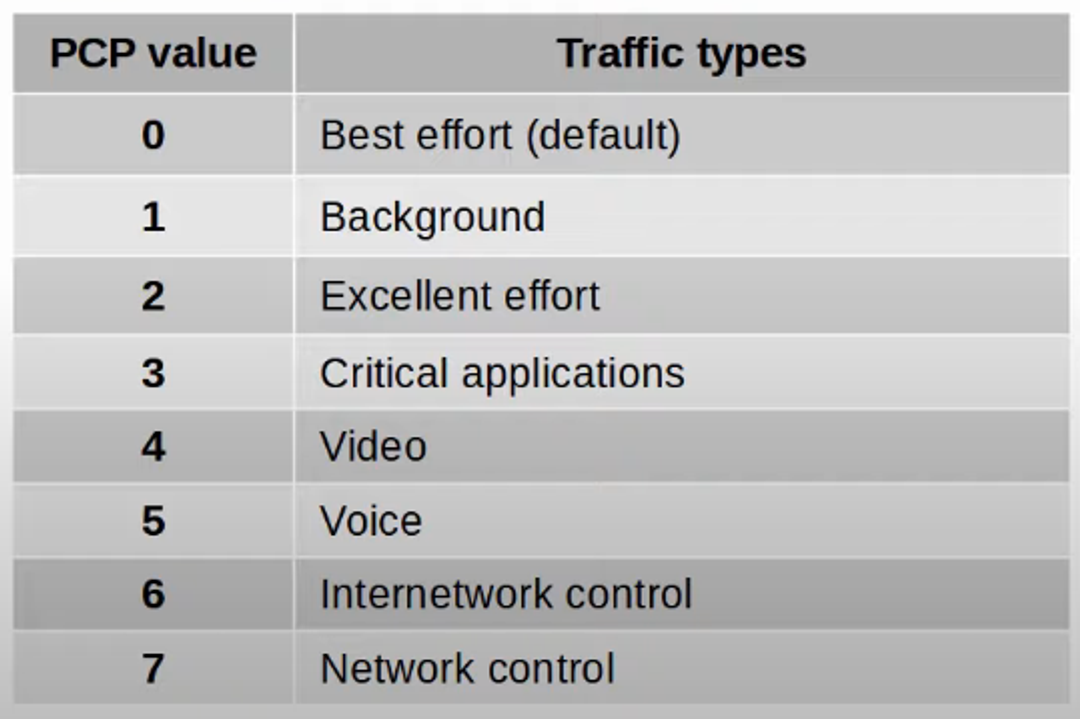
- PCP (Priority Code Point) is also known as Class of Service (CoS) and is defined by the IEEE 802.1p standard.
- It consists of 3 bits, allowing for 8 different values (2³ = 8).
-
PCP Value 0:
- Indicates Best Effort delivery with no guarantees on quality or delivery speed.
-
PCP Values 3 and 5:
- PCP 3: Used for call signaling traffic (establishing phone calls).
- PCP 5: Used for the voice traffic itself.
-
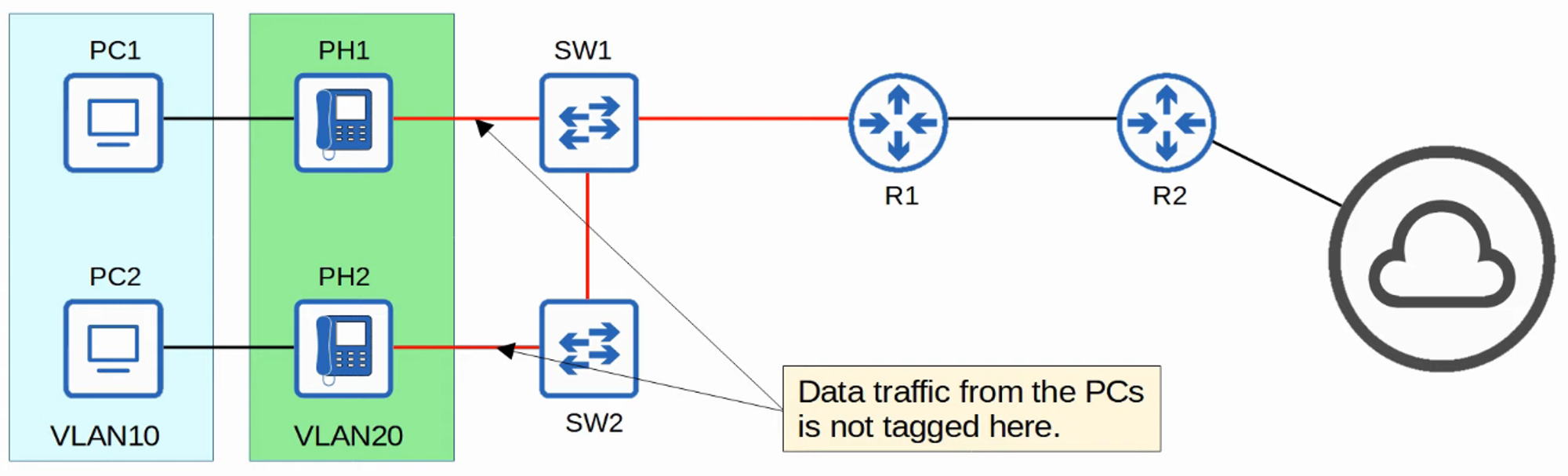
PCP can only be applied in environments where dot1q tags exist, such as:
- Trunk Links.
- Access Links with voice VLANs.
The IP ToS Byte
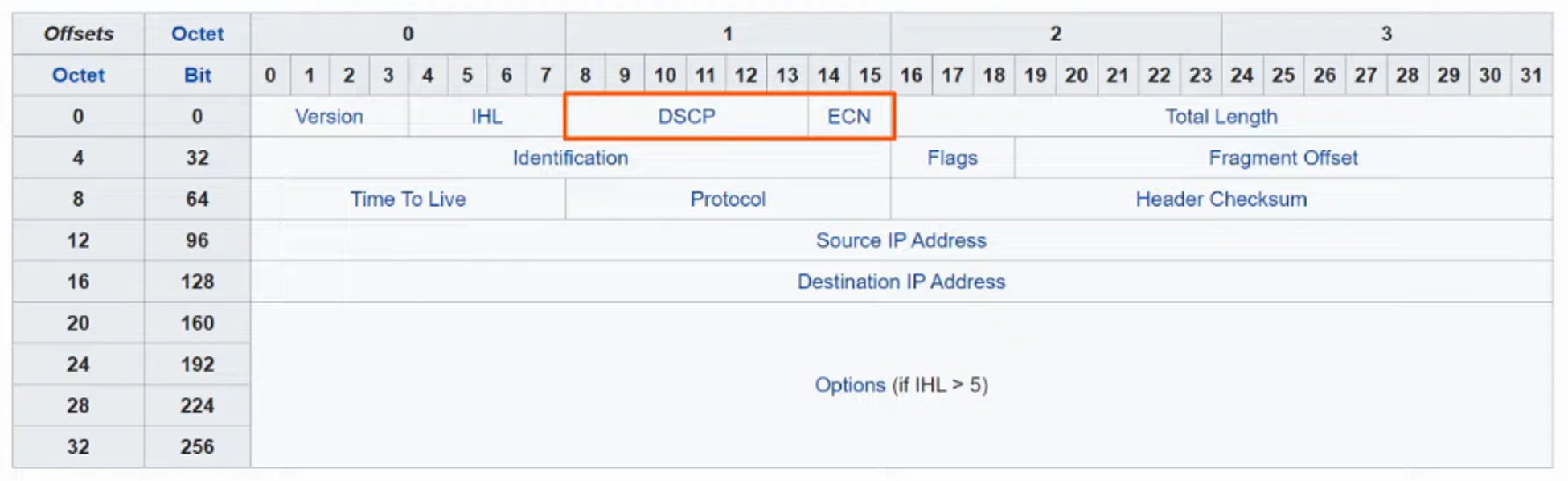

- The Type of Service (ToS) byte in the IP header includes 6 bits for DSCP and 2 bits for ECN (Explicit Congestion Notification).
IP Precedence (Old Method)

-
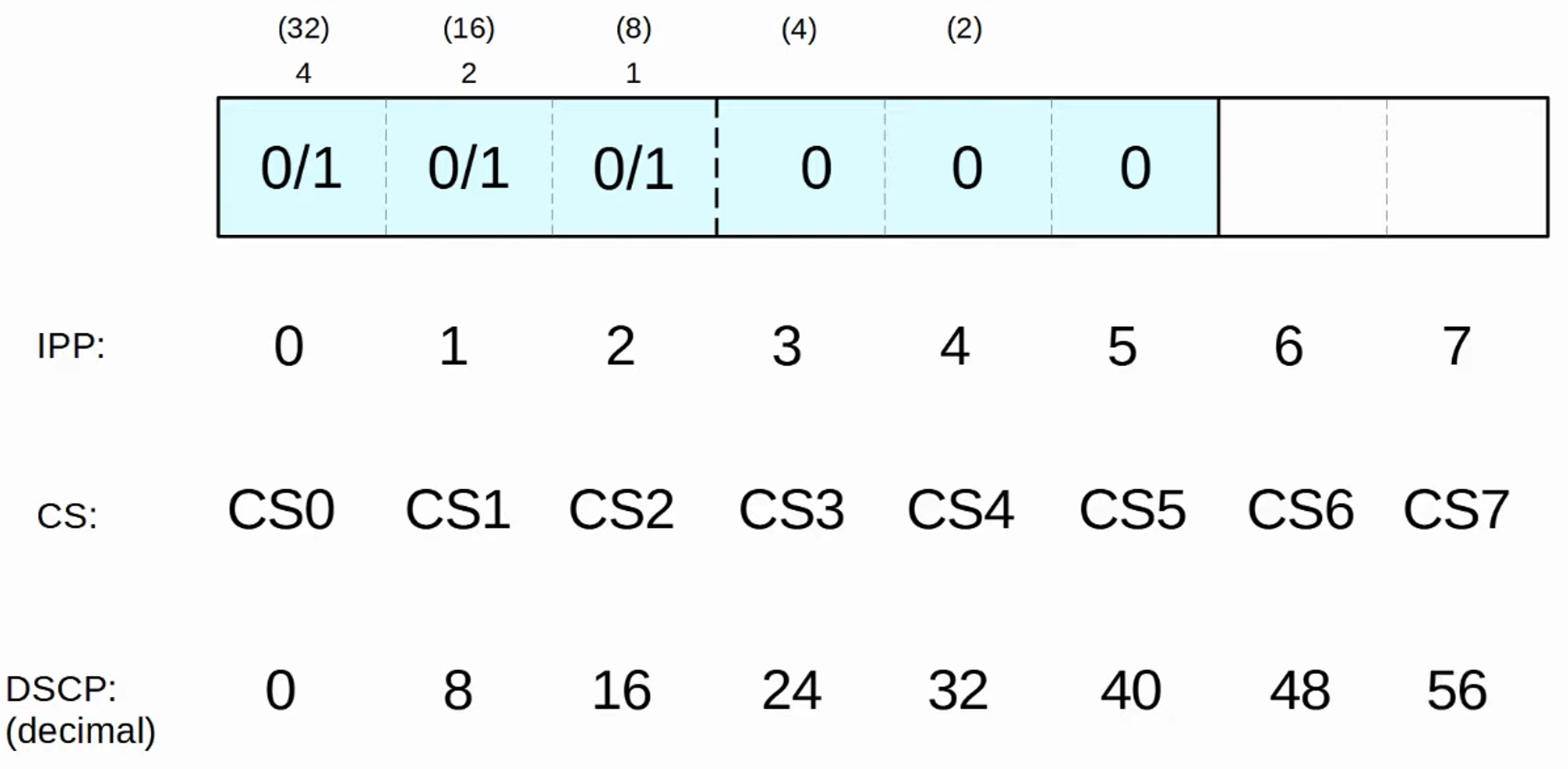
Similar to PCP, IP Precedence (IPP) uses values from 0 to 7:
- 6 and 7: Reserved for network control traffic (e.g., OSPF messages between routers).
- 5: Voice traffic.
- 4: Video traffic.
- 3: Voice signaling.
- 0: Best effort traffic.
-
IP Precedence provides only 6 useful values, which may not be flexible enough for modern networks.
Differentiated Services Code Point (DSCP)

- Defined in RFC 2474 (1998), DSCP allows for more flexibility and standardization in marking different types of traffic.
- Benefits of standard DSCP markings:
- Simplifies QoS design and implementation.
- Facilitates consistent QoS practices between ISPs and enterprises.
Standard DSCP Markings
- Default Forwarding (DF): Best effort traffic.
- Expedited Forwarding (EF): Low loss, low latency, and low jitter traffic (typically voice).
- Assured Forwarding (AF): Provides different classes with varying levels of drop precedence.
- Class Selector (CS): Backward compatibility with IP Precedence (IPP).
Default Forwarding (DF)

- Best Effort Traffic with a DSCP value of 0.
Expedited Forwarding (EF)

- Used for time-sensitive traffic such as voice, marked with a DSCP value of 46.
Assured Forwarding (AF)
- Four traffic classes, each with three levels of drop precedence.
- Higher drop precedence means a greater likelihood of the packet being dropped during congestion.
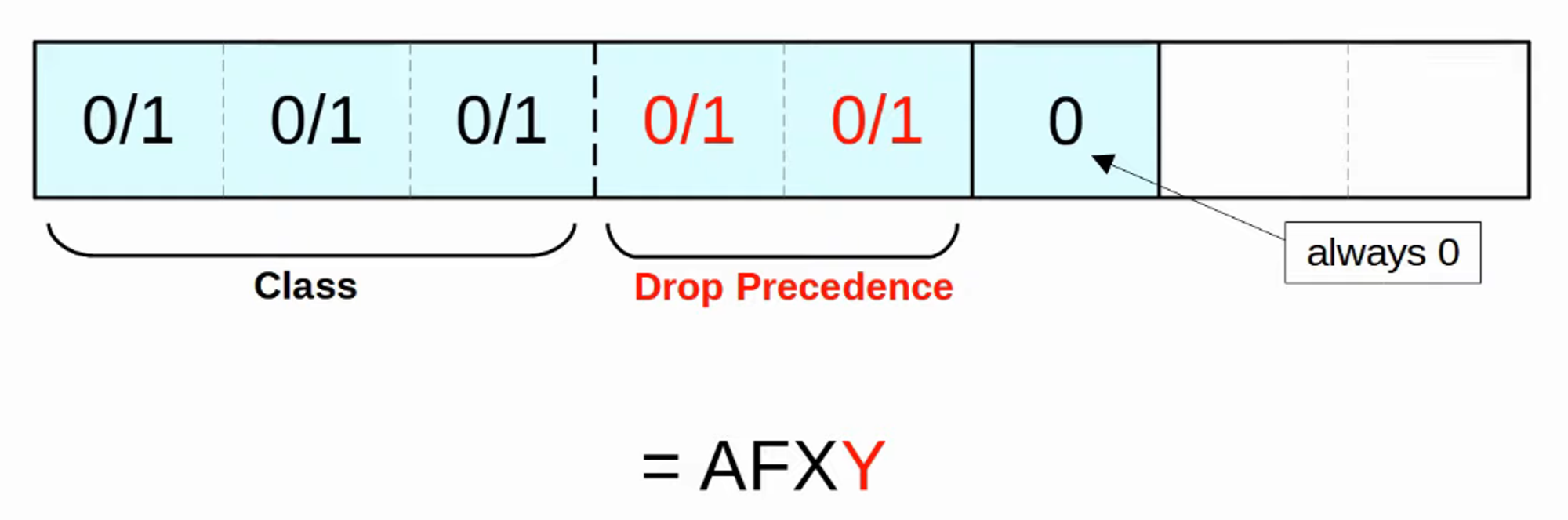
Examples of Assured Forwarding:
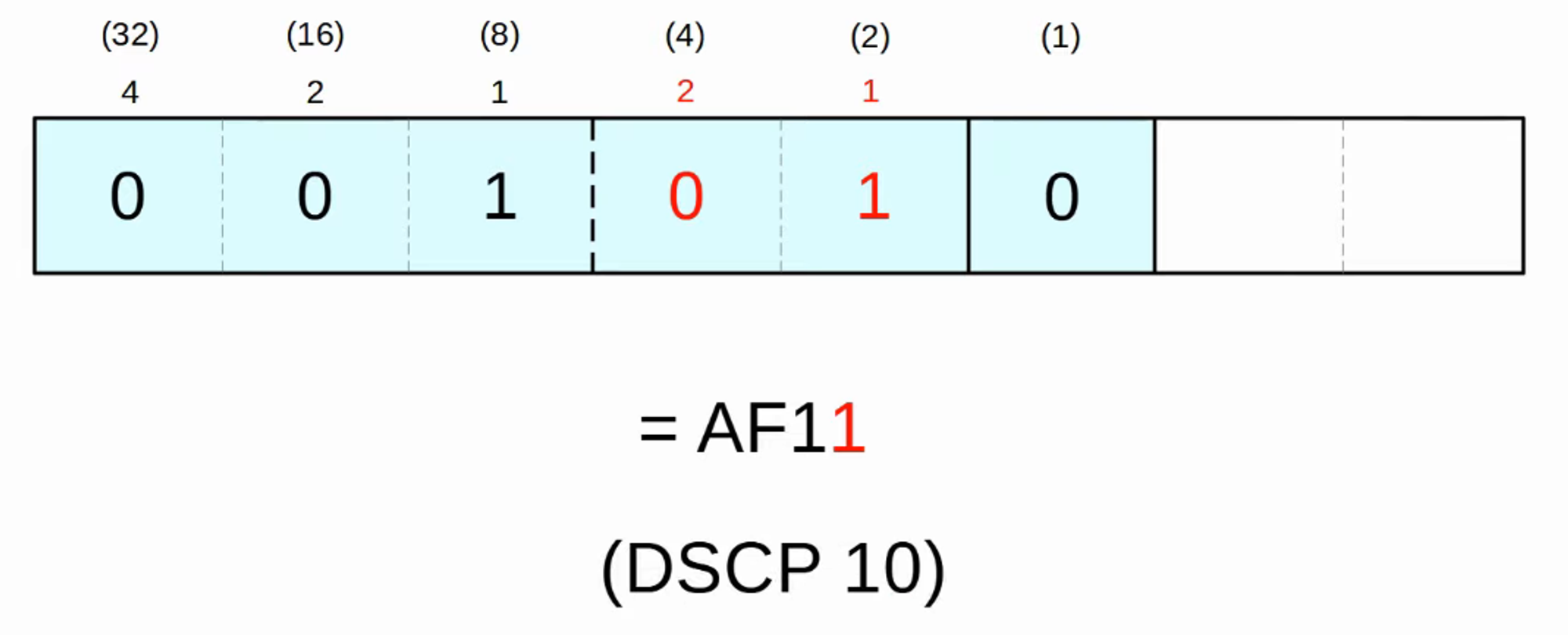
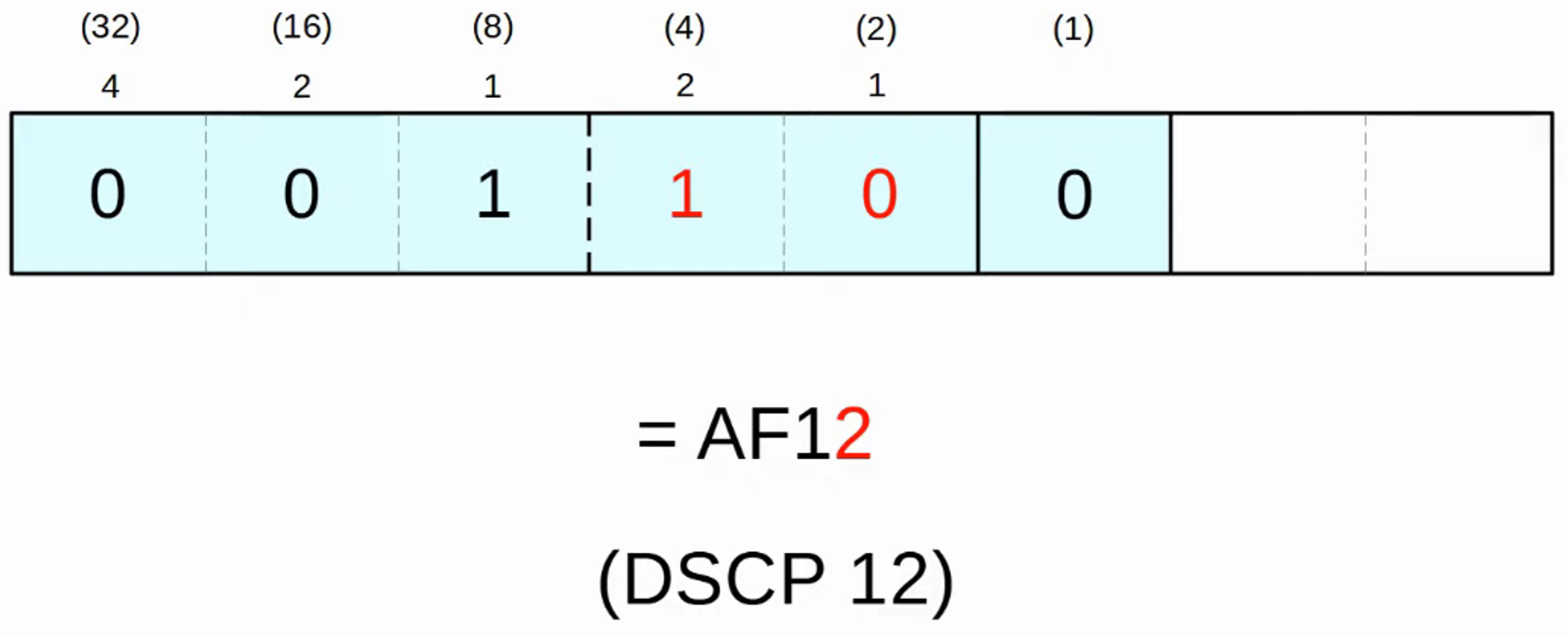
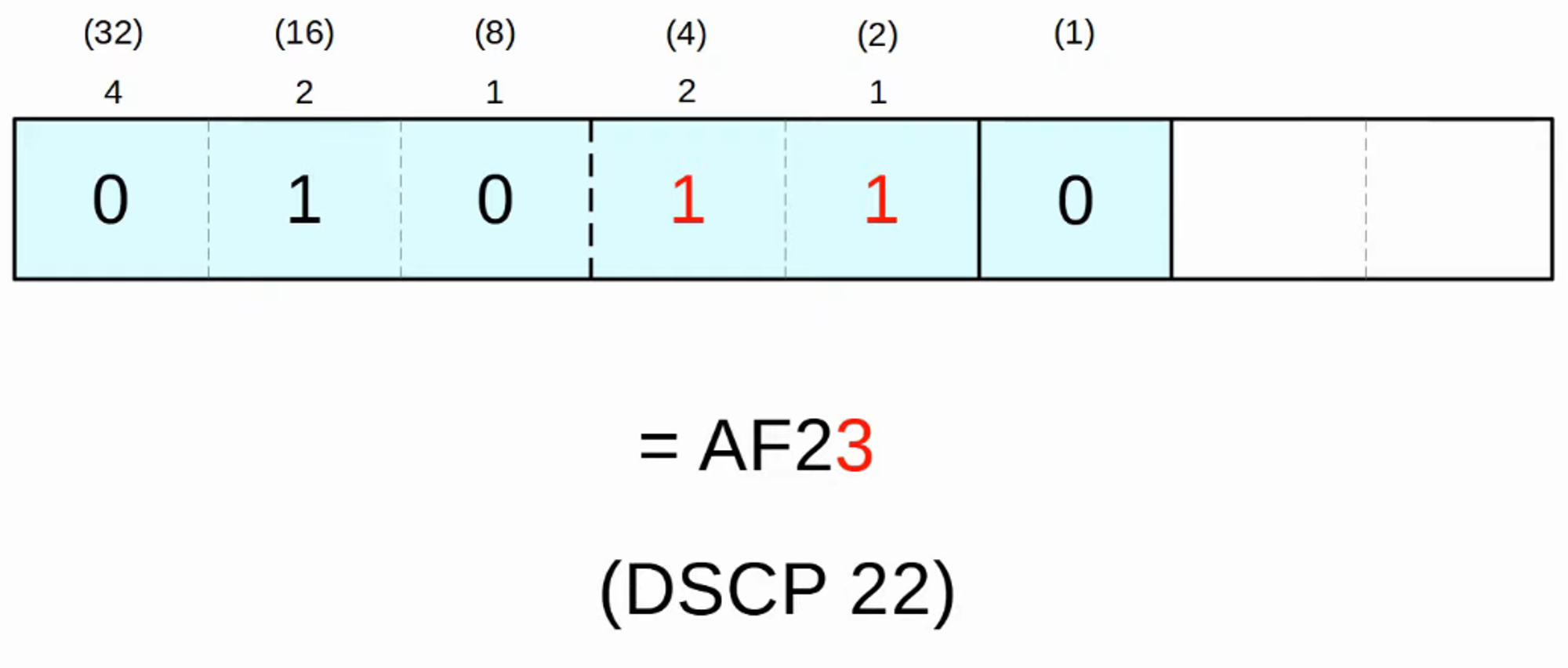
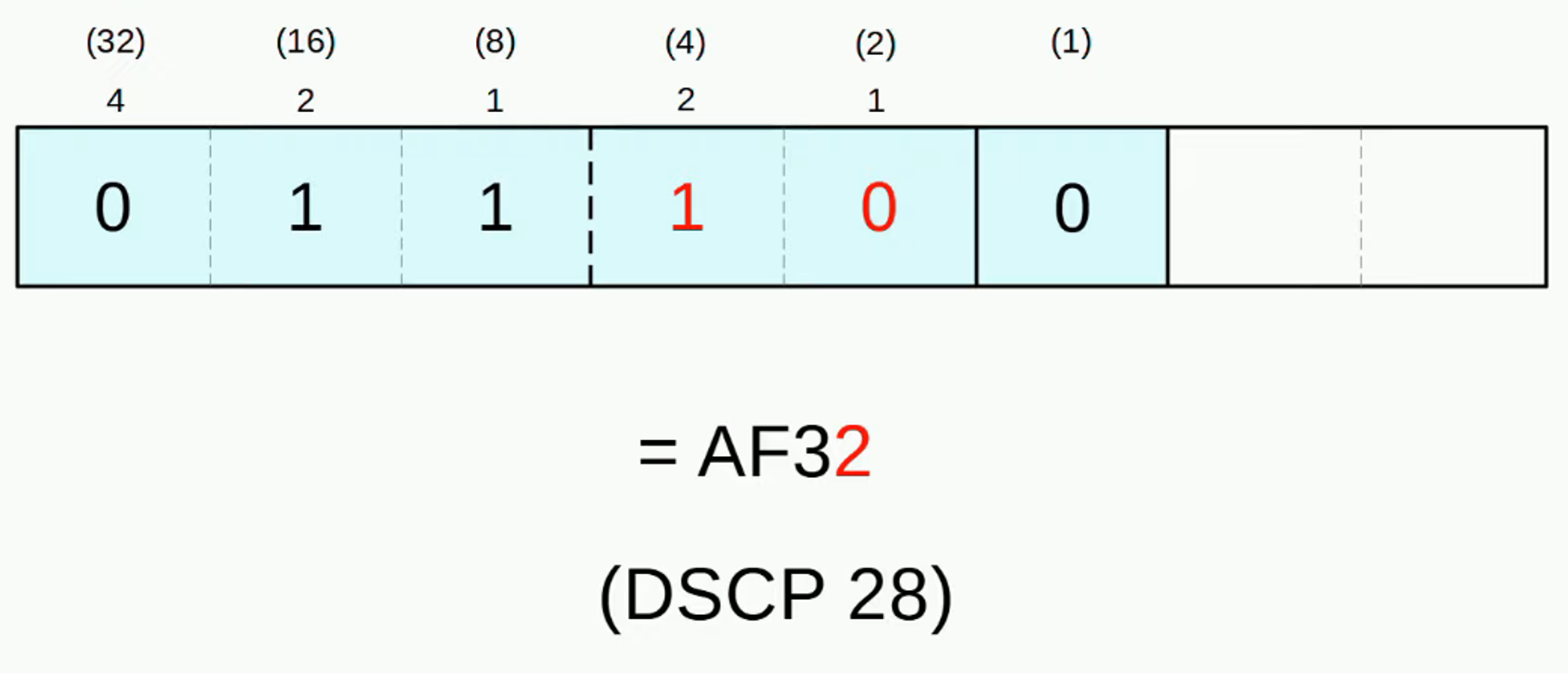
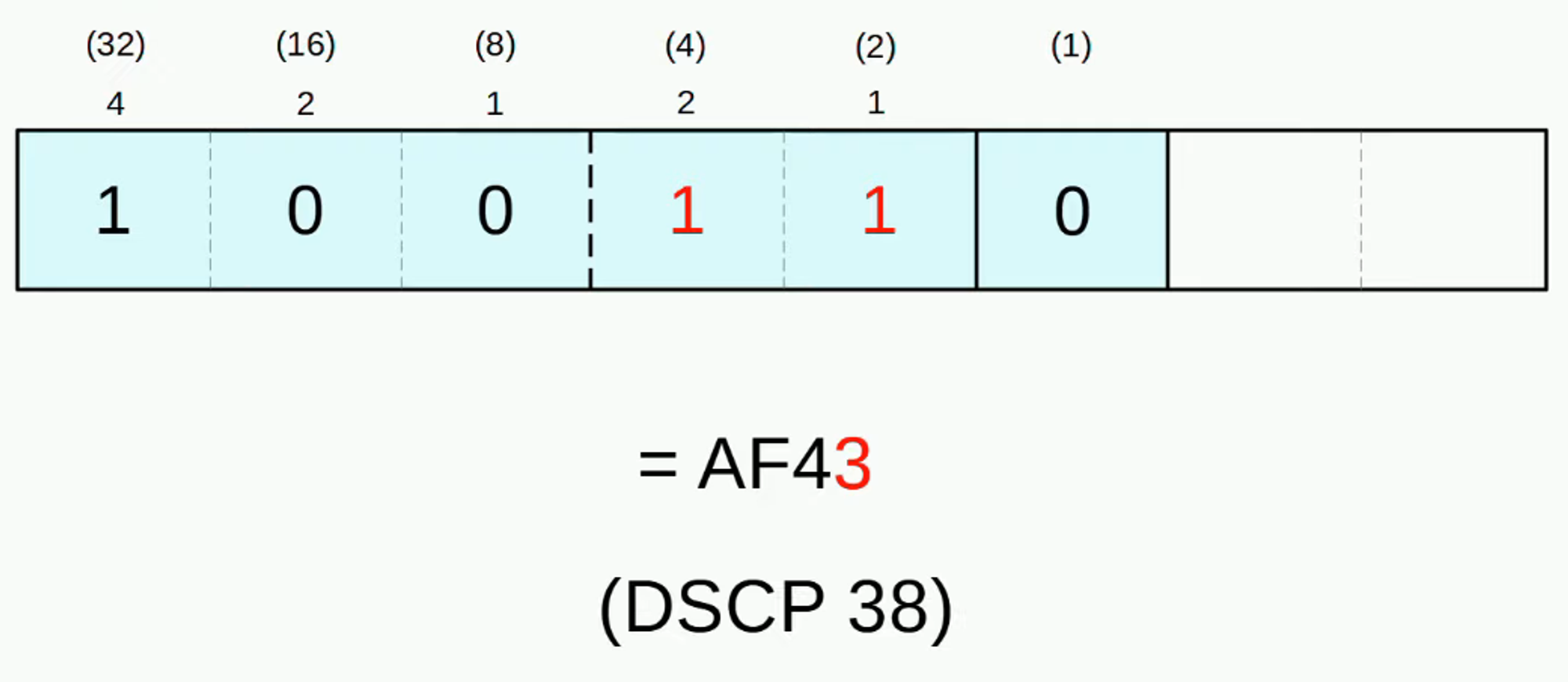

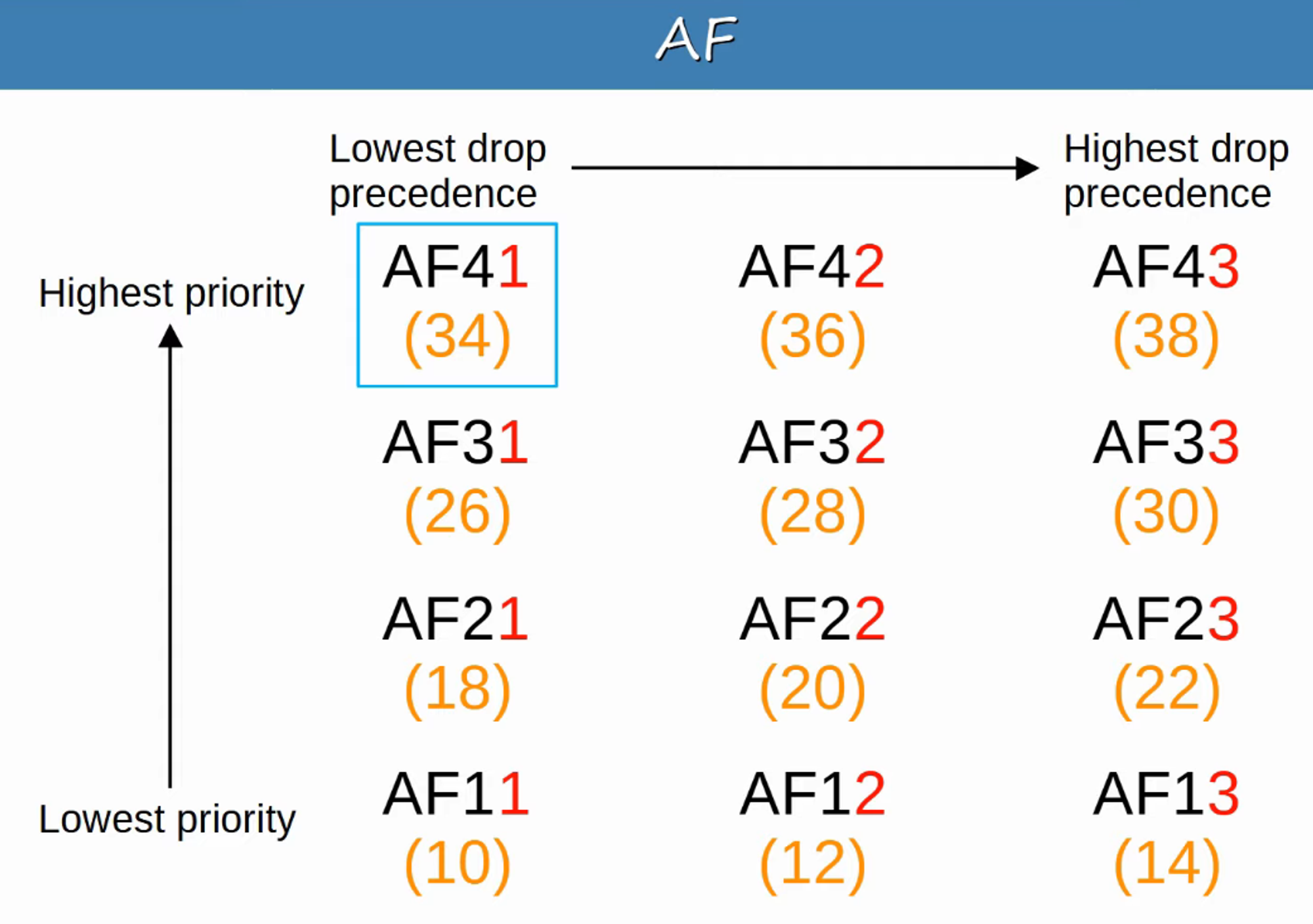
- AF41 (highest priority) receives the best treatment.
- AF13 (lowest priority) receives the worst treatment.
Class Selector (CS)
- Provides backward compatibility with IP Precedence using eight DSCP values.
RFC 4954
- Developed with Cisco’s assistance, RFC 4954 standardizes QoS values across various traffic types.
Key Recommendations:
- Voice traffic: EF.
- Interactive video: AF4x.
- Streaming video: AF3x.
- High-priority data: AF2x.
- Best effort: DF.
Trust Boundaries
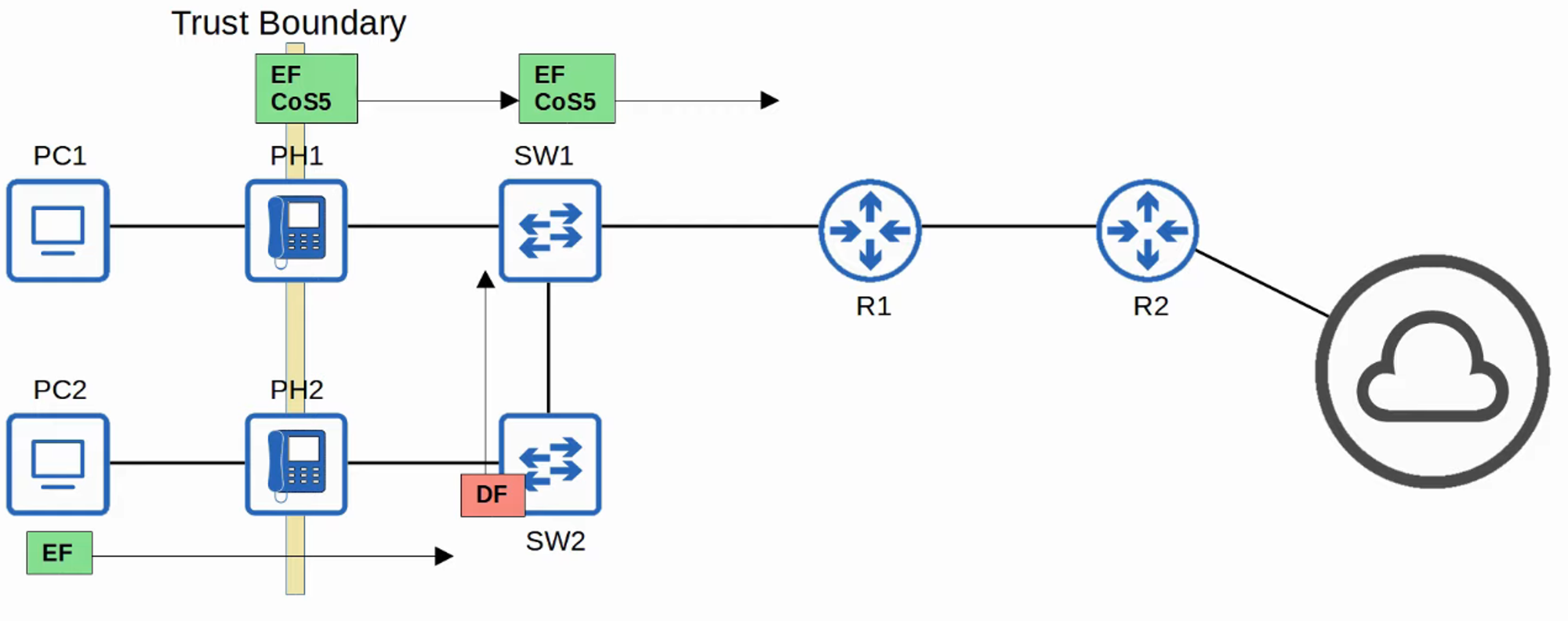
- Trust boundaries define where QoS markings from incoming traffic are trusted.
- Trusted markings are passed along unchanged.
- Untrusted markings are modified according to network policy.
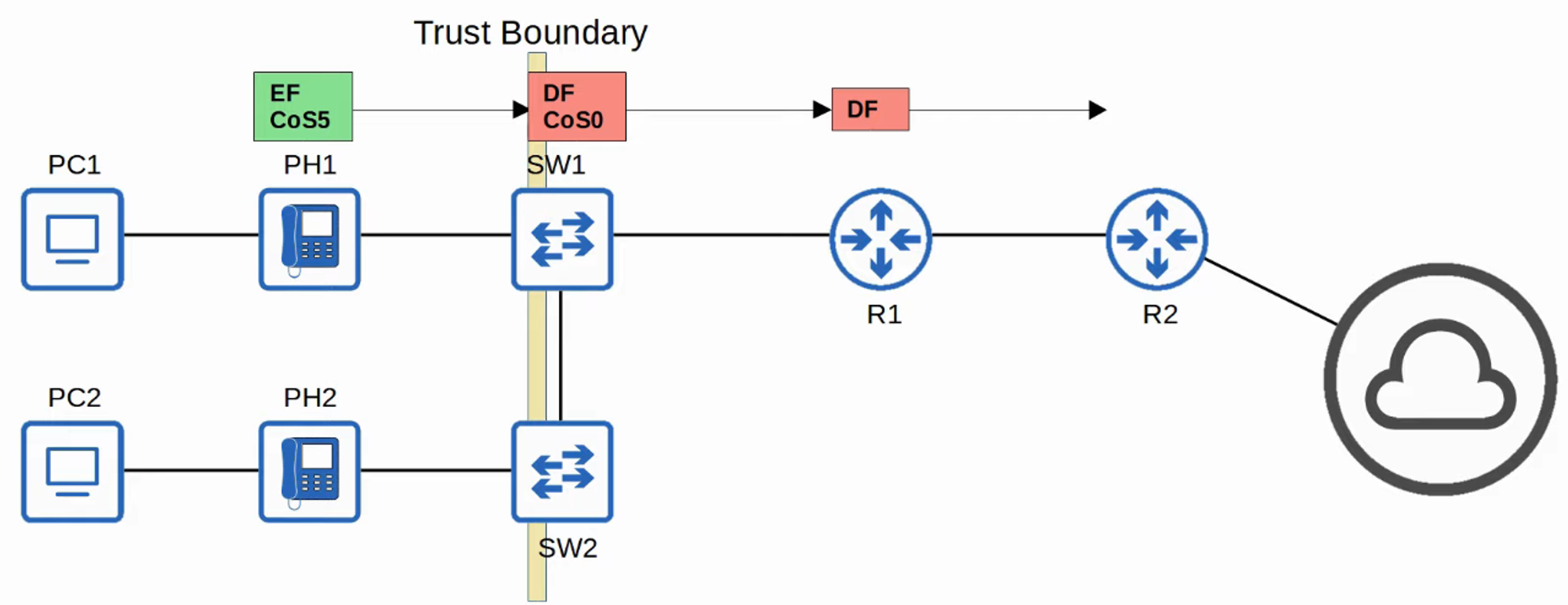
- When IP phones connect to a switch, it’s recommended to extend the trust boundary to the phone itself, ensuring traffic from PCs does not abuse high-priority markings.
Queuing and Congestion Management
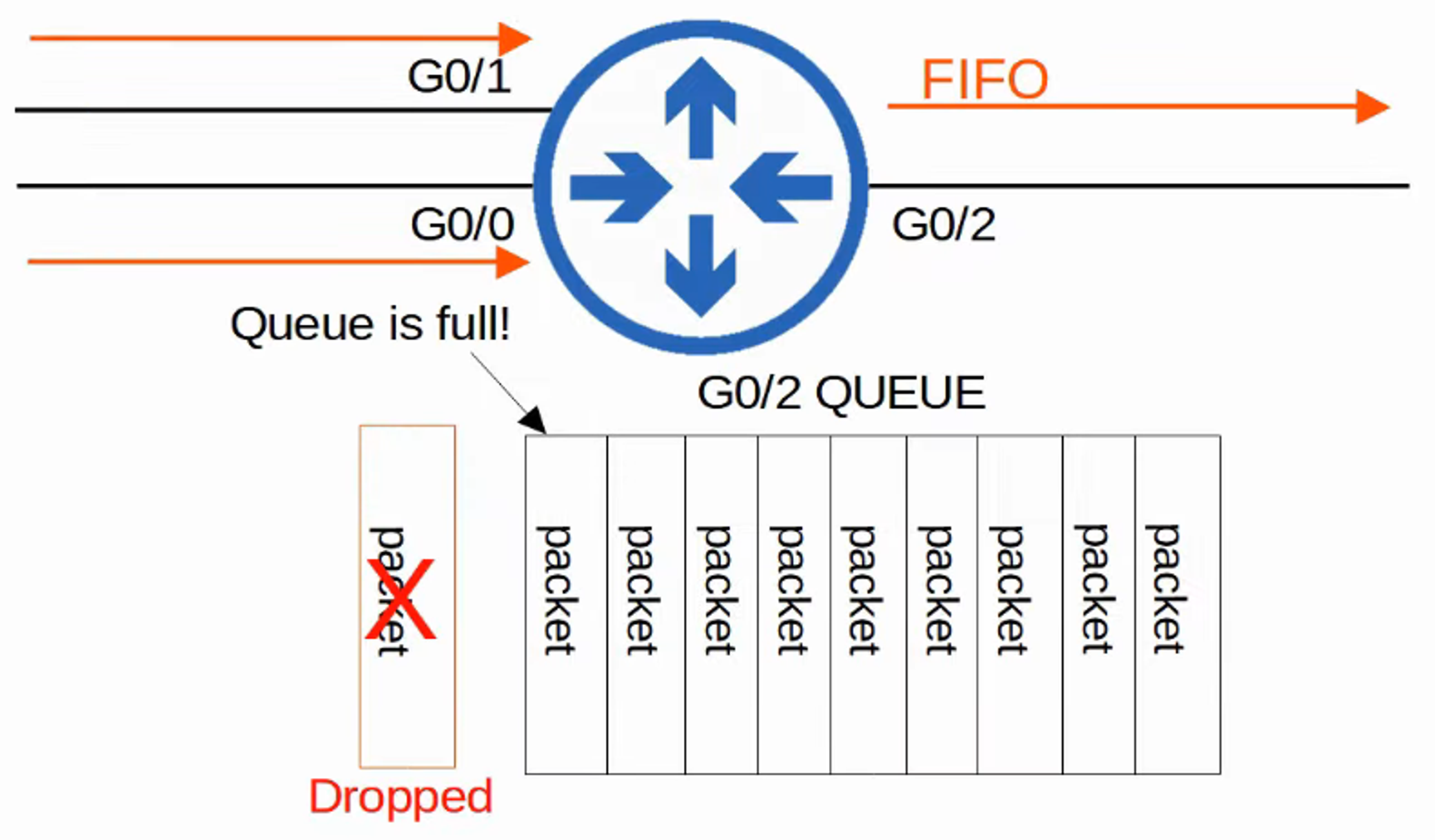
- When traffic arrives faster than it can be forwarded, packets are stored in a queue.
- If the queue is full, new packets are dropped (tail drop).
- Random Early Detection (RED) avoids tail drops by dropping packets early during congestion.
-
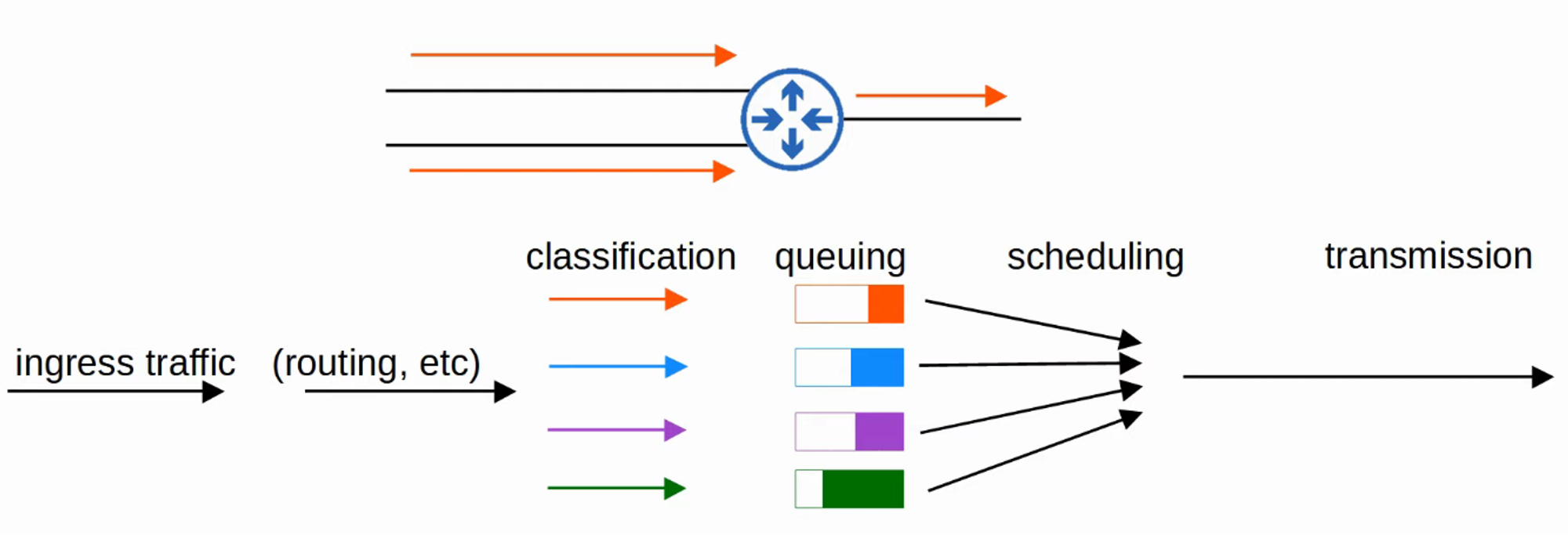
Multiple queues are essential for handling different types of traffic, classified based on factors like DSCP markings.
-
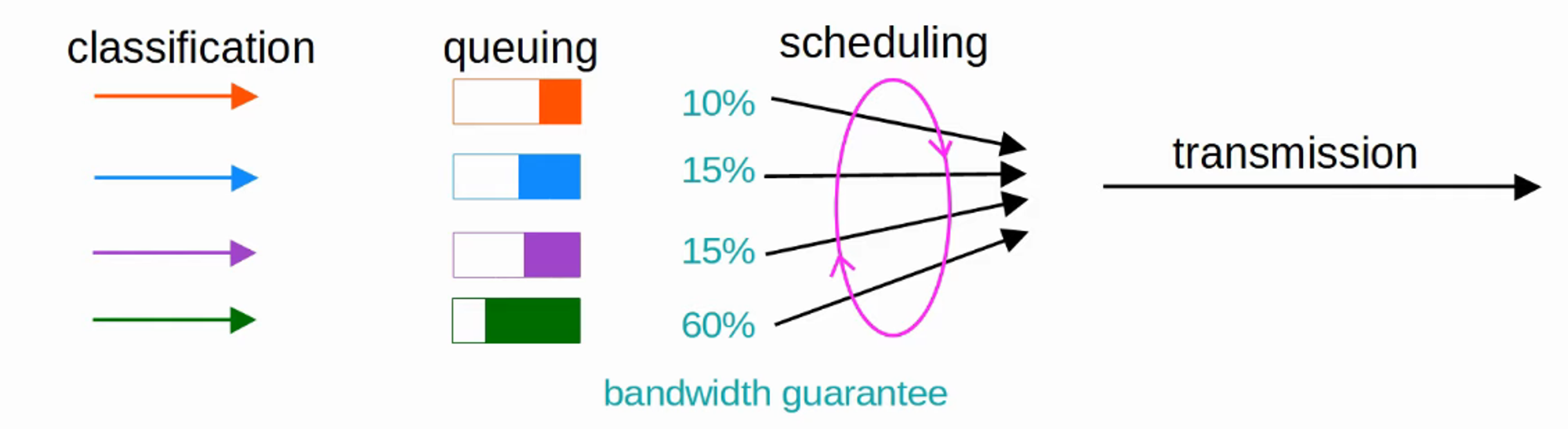
Scheduling determines the order in which packets are forwarded from the queue. A common scheduling method is Weighted Round-Robin (WRR):
- Round-robin: Packets from each queue are forwarded in turn.
- Weighted: Higher priority queues are serviced more frequently.
Class-Based Weighted Fair Queuing (CBWFQ)
- A popular scheduling method that guarantees each queue a specific percentage of bandwidth during congestion.
Low Latency Queuing (LLQ)
- LLQ designates certain queues as strict priority, meaning packets in these queues are always processed first. This minimizes delay and jitter for time-sensitive traffic like voice and video.
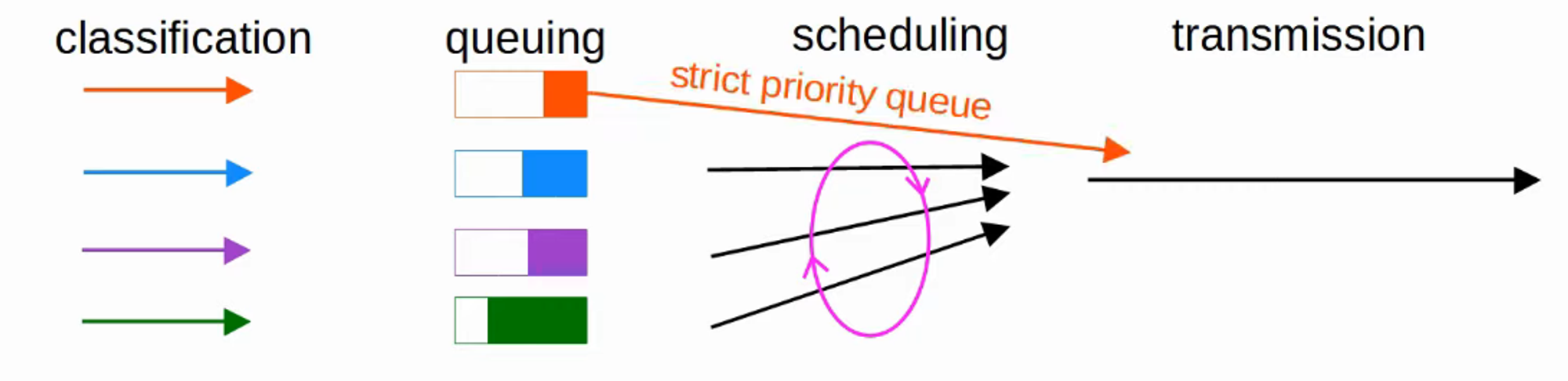
- Downside: LLQ can starve other queues if strict priority queues are constantly full, but this can be mitigated by policing traffic rates.
Shaping and Policing
-
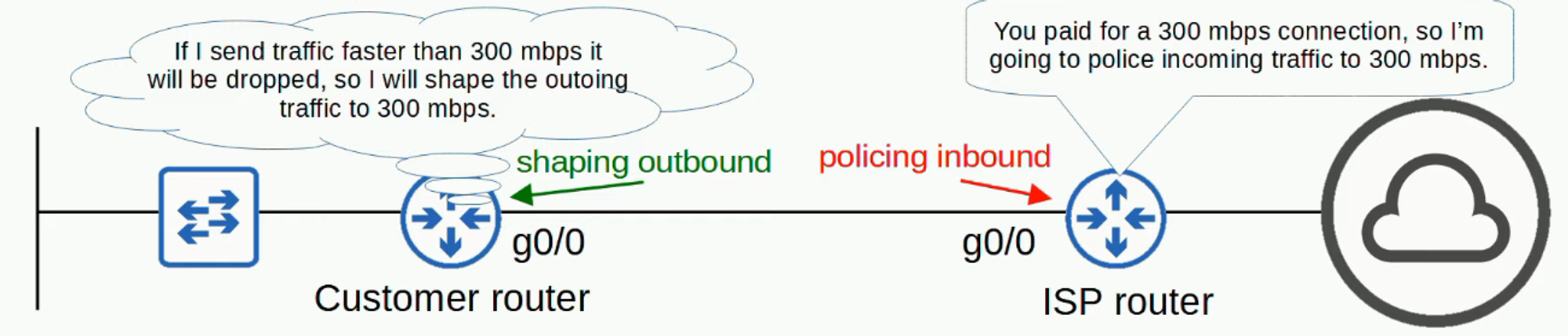
Traffic shaping: Buffers excess traffic when the rate exceeds the configured limit.
-
Traffic policing: Drops excess traffic or re-marks it when the rate exceeds the limit.
-
Burst traffic is temporarily allowed over the configured rate to accommodate applications that send data in bursts.