IP Address Classes and Prefix Lengths
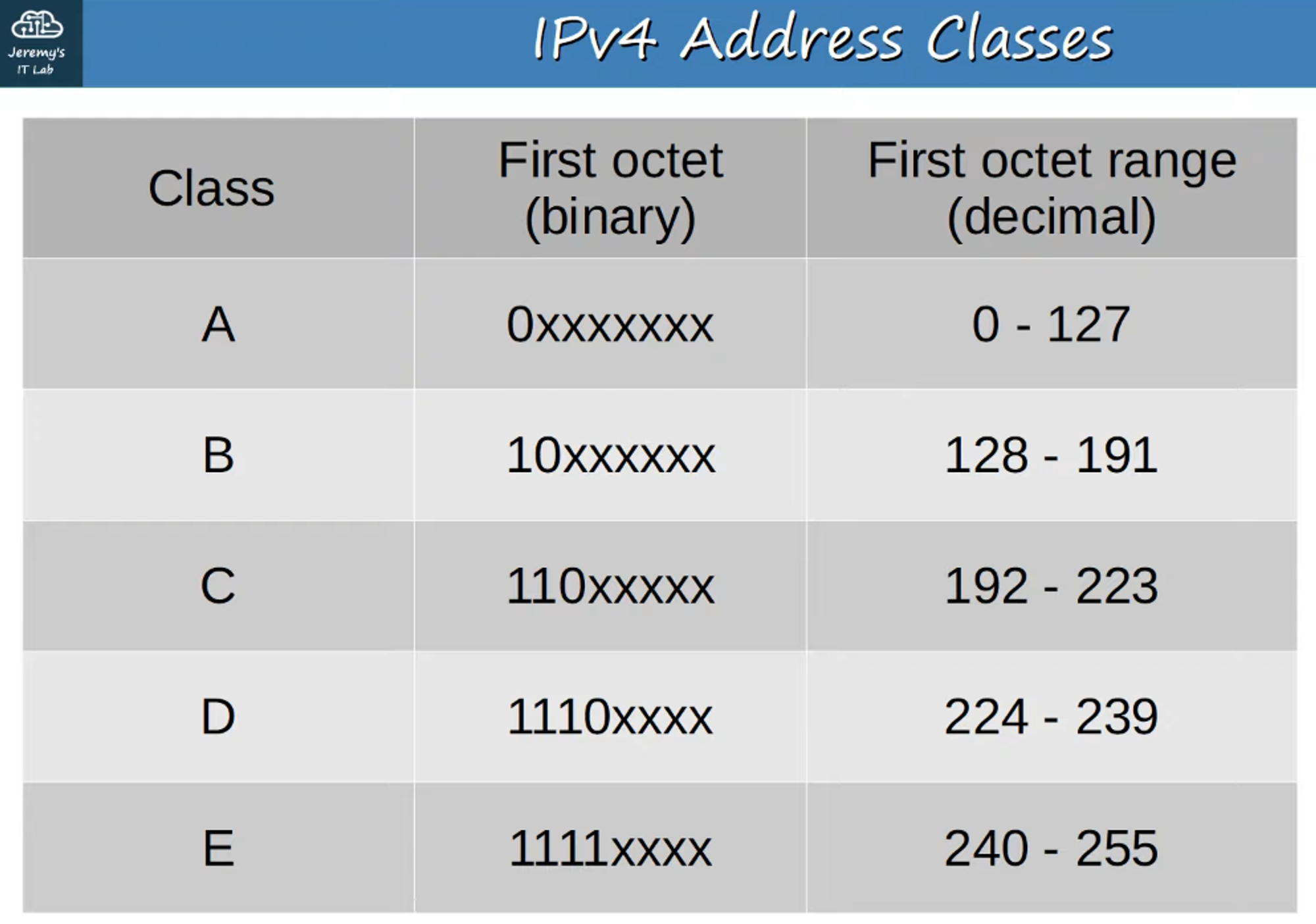
In IPv4, addresses are categorized into classes, but only Class A, B, and C addresses can be assigned to devices as IP addresses:
- Class A: Prefix Length /8
- Class B: Prefix Length /16
- Class C: Prefix Length /24
IP Address Allocation and Wastefulness
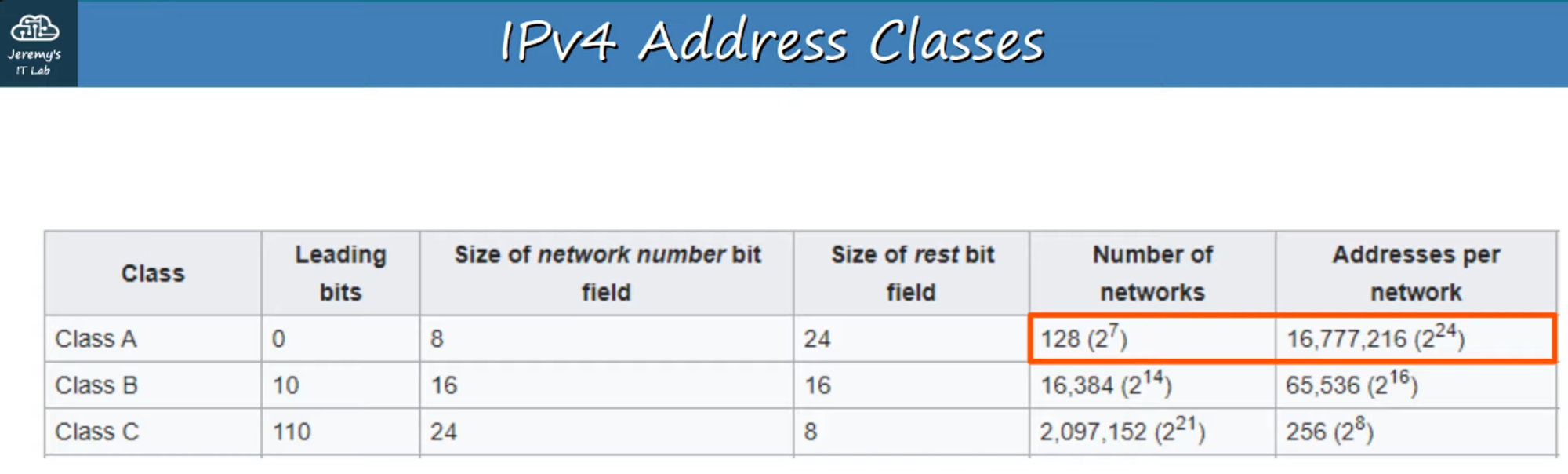
The Internet Assigned Numbers Authority (IANA) assigns IPv4 addresses/networks to companies based on their size. However, the “classful” system led to significant waste of IP addresses. For example, a company needing 5,000 addresses would be assigned a Class B IP address, which has over 65,000 addresses—resulting in more than 60,000 unused addresses.
Introduction of CIDR
To address this inefficiency, the Internet Engineering Task Force (IETF) introduced CIDR (Classless Inter-Domain Routing) in 1993. CIDR removes the rigid size constraints of Class A, B, and C networks, allowing them to be divided into smaller, more efficient networks called “subnets.”
Calculating Usable IP Addresses
To determine how many usable IP addresses are in a given network:
Where:
- n = Number of host bits
Example: CIDR Practice with /25
-
Network: 203.0.113.0/25
-
Binary Representation:
1100 1011 . 0000 0000 . 0111 0001 . 0 | 000 0000 -
Subnet Mask:
1111 1111 . 1111 1111 . 1111 1111 . 1 | 000 0000This equals 255.255.255.128.
-
Usable Hosts:
2^(7 bits) - 2 = 126 hosts
Example: CIDR Practice with /28
-
Network: 203.0.113.0/28
-
Binary Representation:
1100 1011 . 0000 0000 . 0111 0001 . 0000 | 0000 -
Subnet Mask:
1111 1111 . 1111 1111 . 1111 1111 . 1111 | 0000This equals 255.255.255.240.
-
Usable Hosts:
2^(4 bits) - 2 = 14 hosts
Subnetting Cheatsheet
| Group Size | 128 | 64 | 32 | 16 | 8 | 4 | 2 | 1 |
|---|---|---|---|---|---|---|---|---|
| Subnet Mask | 128 | 192 | 224 | 240 | 248 | 252 | 254 | 255 |
| CIDR | /25 | /26 | /27 | /28 | /29 | /30 | /31 | /32 |
| 3rd Octet | /17 | /18 | /19 | /20 | /21 | /22 | /23 | /24 |
| 2nd Octet | /9 | /10 | /11 | /12 | /13 | /14 | /15 | /16 |
| 1st Octet | /1 | /2 | /3 | /4 | /5 | /6 | /7 | /8 |
Subnetting Process Overview
- Identify CIDR/Subnet Mask: Locate it on the cheat sheet.
- Find Group Size: Increase by group size until passing the target IP.
- Calculate:
- Network ID: Number before the target IP.
- Next Network: Number after the target IP.
- Broadcast Address: IP address before the next network.
- First Host: IP address after the network ID.
- Last Host: IP address before the broadcast IP.
- Total Addresses: Group size (minus 2 for usable addresses).
Example: Solving CIDR for 3rd Octet IPs
- Address: 10.4.77.188/19
- Subnet Mask: 255.255.224.0
- Group Size: 256 - 224 = 32
- Range: 10.4.64.0 to 10.4.95.255
- Usable Addresses: 8192
Alternative Subnetting Method (Without Cheat Sheet)
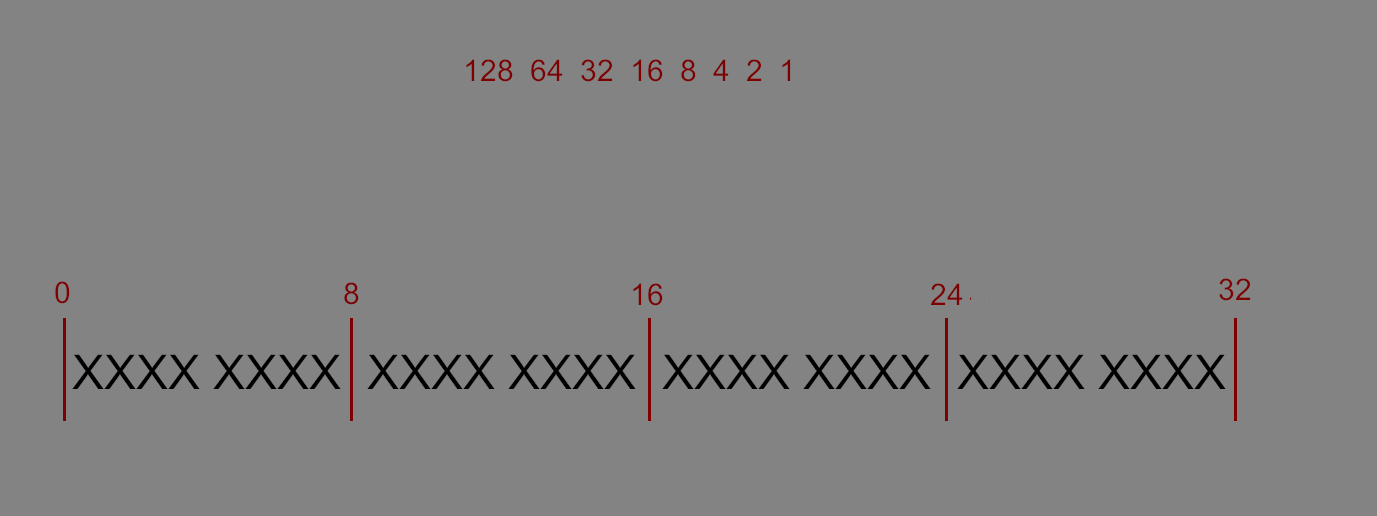
- Identify the “Magic Octet”: Where the IP/Prefix lies.
- Count Network Bits: Determine the address group size.
- Calculate Subnet Mask: Based on the magic octet.
- Determine Base Network and Broadcast:
- If remainder in division, use integer times group size.
- No remainder, base address is that octet value.
- Calculate Subnets and Usable Hosts.
Example 1:
- Address: 154.219.154.180/20
- Magic Octet: 3rd
- Subnet Mask: 255.255.240.0
- Network: 154.219.144.0
- Broadcast: 154.219.159.255
- Subnets: 16
- Total Hosts: 4094
Example 2:
- Address: 84.75.21.6/10
- Magic Octet: 2nd
- Subnet Mask: 255.192.0.0
- Network: 84.64.0.0
- Broadcast: 84.127.255.255
- Subnets: 4
- Total Hosts: 4,194,302