WHAT IS ROUTING?
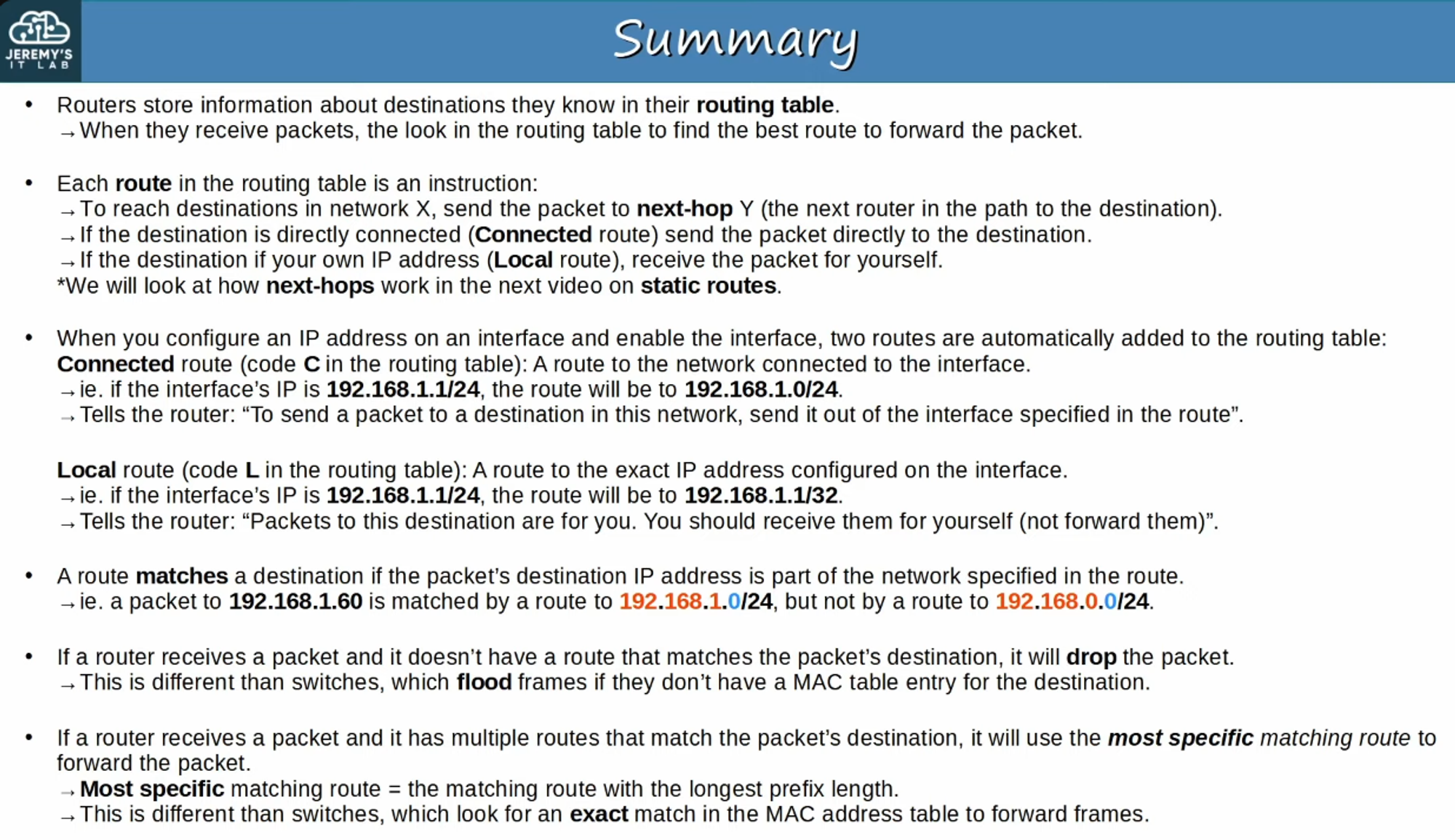
Routing is the process used by routers to determine the best path for IP packets to travel across a network to reach their intended destination.
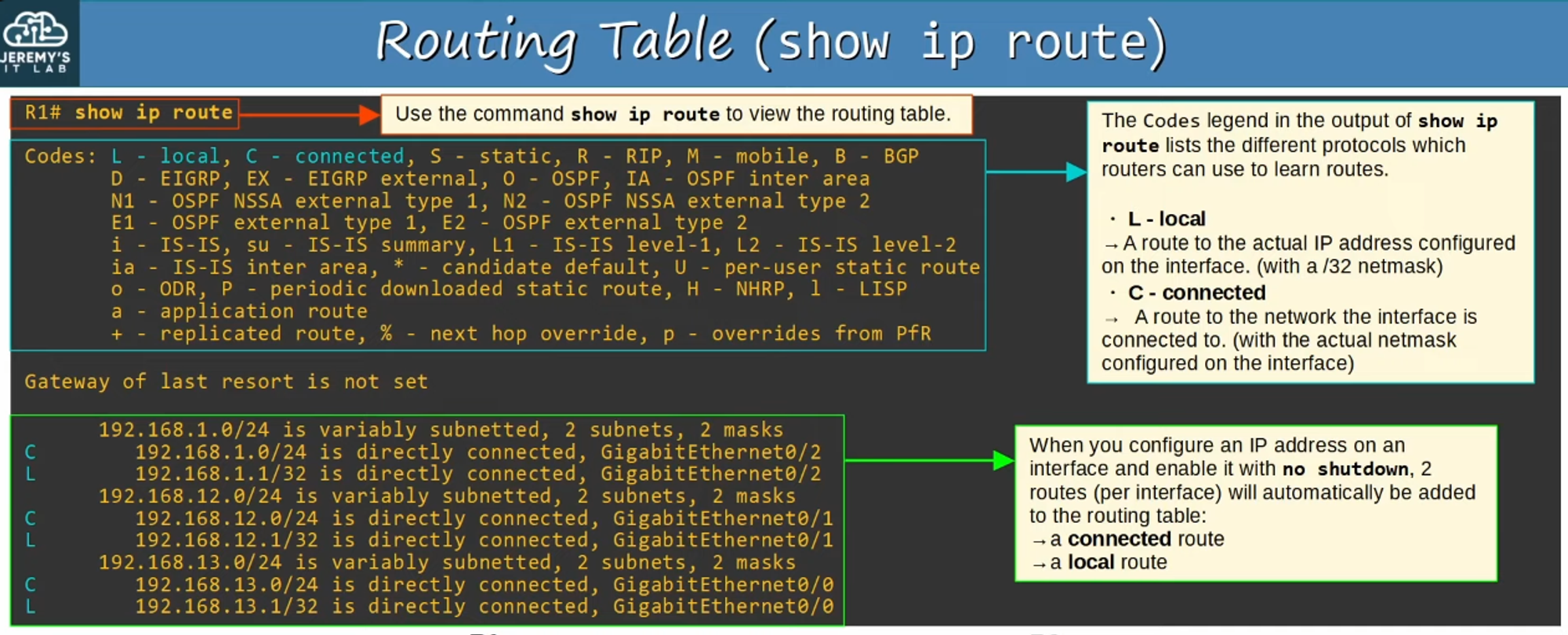
- Routing Tables: Routers store routes to all known destinations in a routing table. When a router receives a packet, it consults this table to find the best route for forwarding the packet.
Two Main Routing Methods
-
Dynamic Routing:
- Automated: Routers use dynamic routing protocols (e.g., OSPF) to automatically share routing information and build their routing tables.
-
Static Routing:
- Manual Configuration: A network engineer or administrator manually configures routes on the router.
What a Route Tells the Router
- Next-Hop Routing: For a packet destined for X, the router sends it to the next-hop Y.
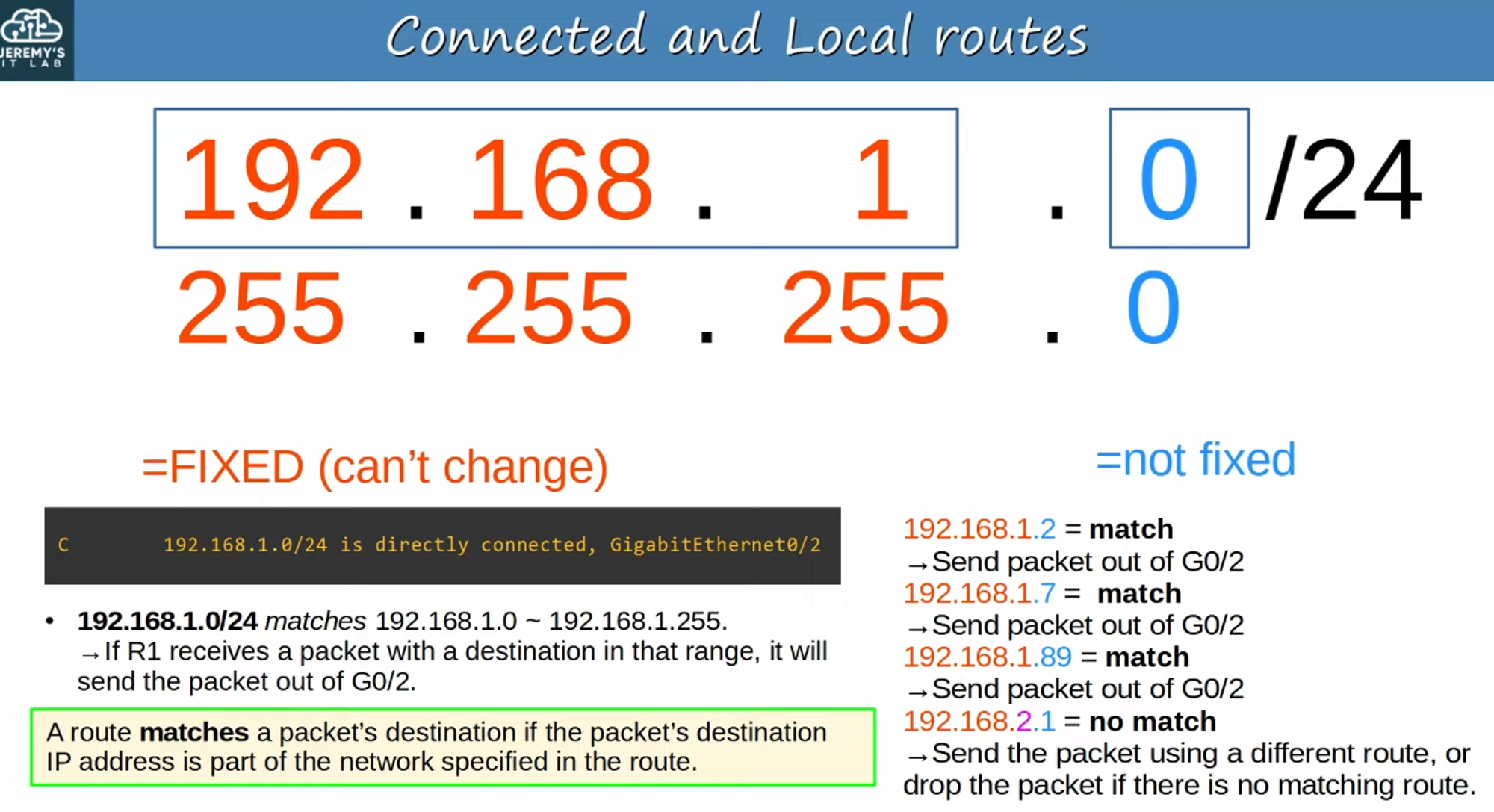
- Directly Connected: If the destination is directly connected, the router sends the packet directly to the destination.
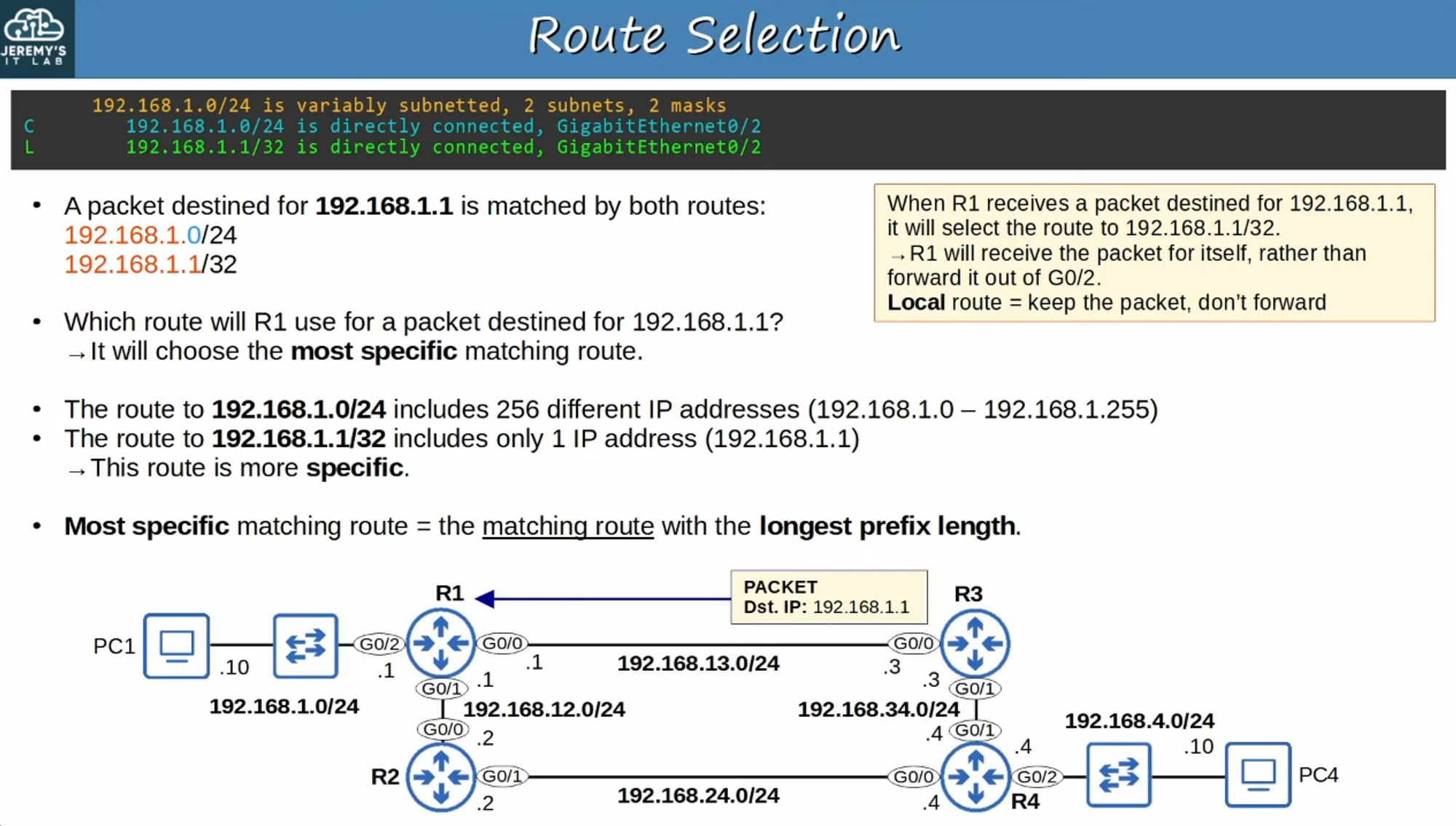
- Self-Addressed: If the destination is the router’s own IP address, the router keeps the packet (it does not forward it).
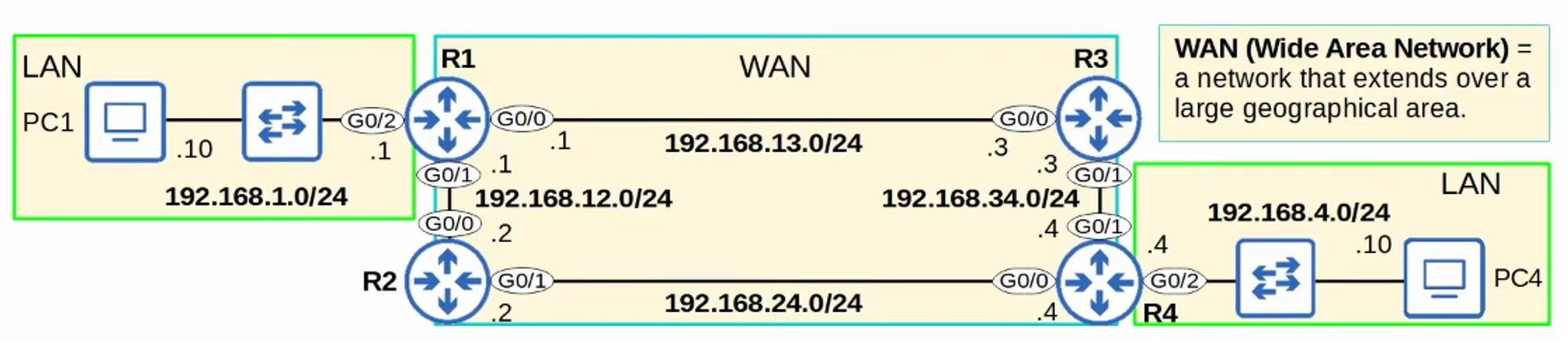
WAN (Wide Area Network)
A WAN is a network that extends over a large geographic area, connecting multiple smaller networks, such as LANs.